
9 Fall Preschool Activities During Thanksgiving Cooking
Thanksgiving cooking can turn the kitchen into the busiest room in the house. There are hot pans, sharp tools, open appliances, crowded counters, and adults moving quickly while your preschooler wants to help with everything they can see. Telling them to stay out of the way usually works for about thirty seconds.
The safest jobs happen outside the main cooking path and use materials that are already cool, dry, and nonbreakable. Napkins, empty measuring cups, paper recipe cards, towels, place cards, menu pictures, and soft pretend food can all give your child a real Thanksgiving role without putting them near heat or knives.
These activities are designed for a nearby low table, dining area, or clear floor space. They keep preschool-level complexity through sorting, sequencing, setting, counting, planning, and delivering. Your child gets to contribute to the day, and you get a defined station that does not move closer to the stove every time you turn around.
Set up a real cooking-day job outside the kitchen path
Choose the station before cooking gets busy. Put every material in one basket or on one tray and tell your child exactly where the job begins and ends.
An adult can carry finished items into the kitchen or dining area. Your preschooler does not need to cross the hot zone for the work to feel useful.
1. Dry Napkin Fan Fold
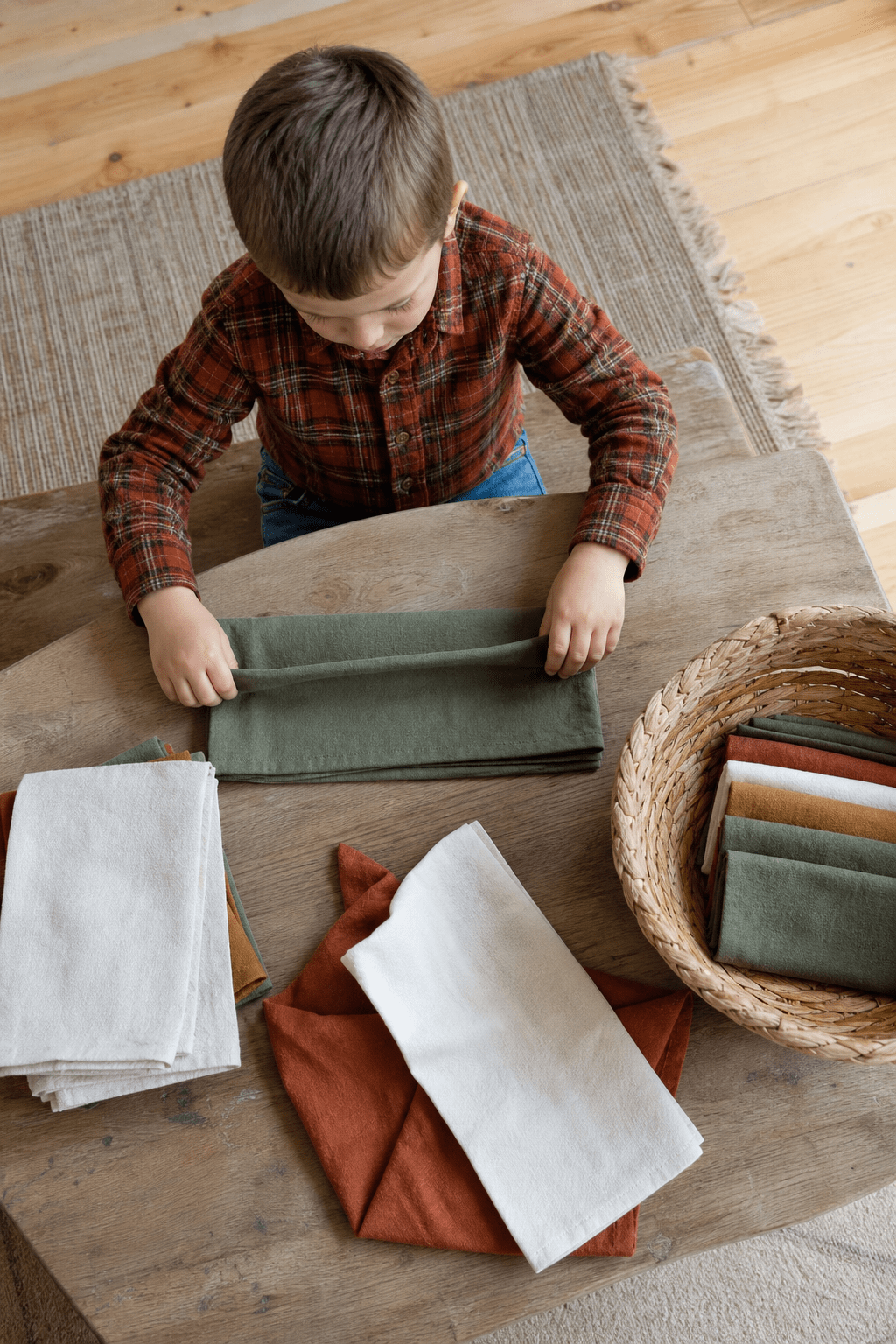
Place six cloth or sturdy paper napkins on a low table away from the kitchen. Show your preschooler how to fold one napkin back and forth into wide sections, press the creases, and place it in a finished basket. The folds do not need to look perfect. At the end, they count the basket and stack any flat extras underneath.
Why it works: The repeated folding and pressing creates a real table job with a visible finish. Wide imperfect folds are still useful and keep the activity at a preschool level.
Age range tweak:
- Age 3: Fold napkins in half and pat them flat.
- Age 4: Try wide fan folds and place each finished napkin in the basket.
- Age 5: Plan how many are needed, create consistent folds, count the basket, and stack extras.
2. Pumpkin Recipe Card Sort
Create large recipe cards with simple pictures for mix, bake, cool, and serve, plus a pumpkin picture on each. Your preschooler places the cards in story order, moves a clothespin-shaped paper marker along the sequence, then mixes the cards and rebuilds it. When an adult finishes a stage in the real kitchen, the child turns that card face down from the safe station.
Why it works: Sequencing connects the child to the cooking process without bringing them near the equipment. Turning down a finished card gives real feedback and keeps the station relevant as the day moves.
Keep the child at the separate station and let an adult report when hot or appliance-based stages are finished.
Age range tweak:
- Age 3: Use two picture cards for before and after.
- Age 4: Order four cards and turn them over as stages finish.
- Age 5: Add labels, explain the sequence, notice delays, and file the cards afterward.
When You Need More Screen-Free Ideas

We made a free Screen-Free Activity Finder for exactly this. Pick your child's age, how much time you have, how much energy they have, and how much help you can give. It'll send you screen-free activity ideas that use normal home materials.
Drop your email and we'll send it over. Unsubscribe anytime.
3. Apple Place Card Delivery
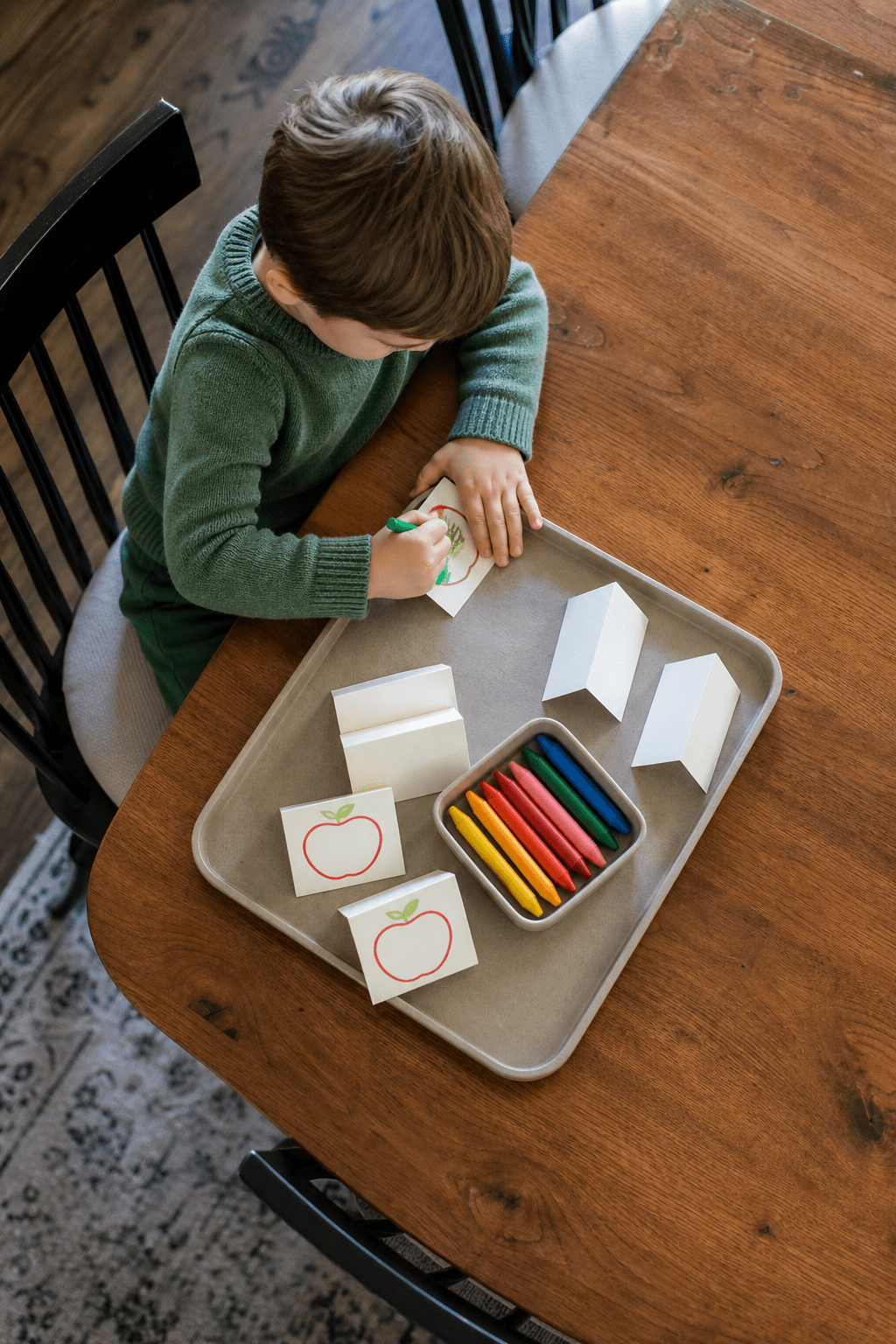
Fold large index cards and draw an apple on each one. Your preschooler copies a first initial or draws a symbol for each person, places the cards in a tray, and delivers them to the dining table before hot food, knives, or glassware arrive. They check the number of seats and bring unused cards back to the station.
Why it works: The activity combines early writing, counting, and a real delivery job. Finishing before the table becomes busy keeps the work safe and gives it a clear deadline.
Complete delivery before hot food, knives, serving dishes, candles, or glassware are placed on the table.
Age range tweak:
- Age 3: Decorate two cards while an adult writes the names.
- Age 4: Copy initials and deliver the cards to clear places.
- Age 5: Write short names with a model, check the seat count, and collect extras.
4. Empty Measuring Cup Match
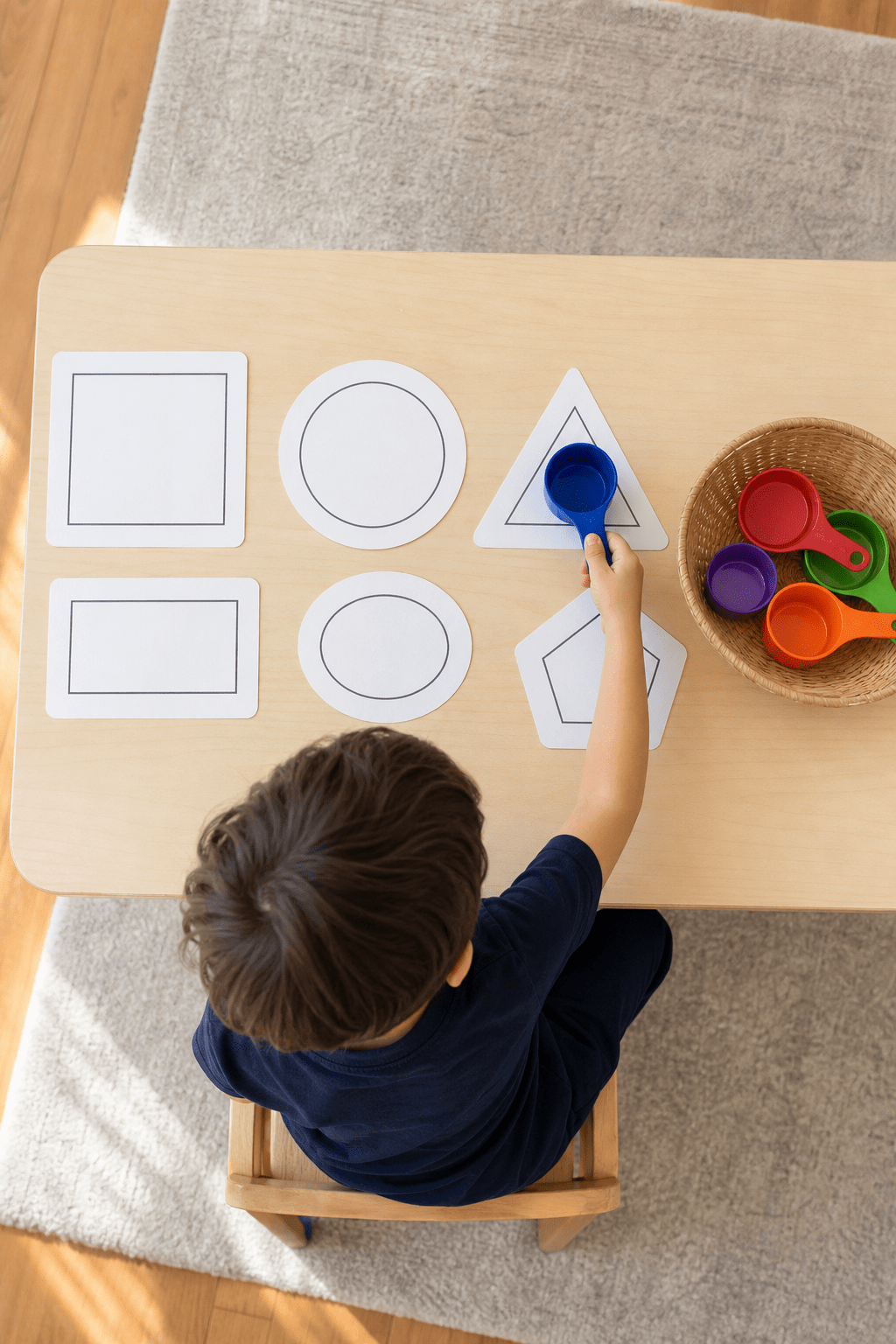
Set out several clean empty plastic measuring cups and matching large paper outline cards at a low table. Your preschooler places each cup on its outline, nests cups that belong together, and creates a line from smallest to largest. They can pretend to fill recipe orders with rolled sock ingredients, then return every cup to a basket.
Why it works: The cups feel connected to cooking while staying dry and safe. Matching, nesting, ordering, and pretend measuring create several hands-on jobs from one set.
Use clean plastic tools only, with no glass, hot ingredients, or access to the active cooking area.
Age range tweak:
- Age 3: Match two very different cups to large outlines.
- Age 4: Match and order a small set of plastic cups.
- Age 5: Read simple size labels, build pretend orders, check the set, and return it to storage.
5. Stuffed Turkey Table Guest
Use a large stuffed bird or stuffed bear as the pretend Thanksgiving guest. Set out a nonbreakable plate, folded napkin, empty plastic cup, and one large paper menu. Your preschooler sets the place, asks the guest to choose a picture meal, clears the setting, and resets it for another guest. Everything returns to a basket when the station closes.
Why it works: Pretend service lets the child rehearse table routines and repeat the setup without touching real food. The stuffed guest gives each reset a reason.
Age range tweak:
- Age 3: Set one plate and napkin for the stuffed guest.
- Age 4: Complete the place setting, take a picture order, and clear it.
- Age 5: Create menu options, run several guest rounds, inspect the setting, and pack the basket.
6. Harvest Towel Stack
Place a basket of clean hand towels and cloth squares near the dining area. Your preschooler sorts them by size, folds each one into a rectangle, builds a stable stack, and carries one small stack to a safe storage chair. If it tips, rebuilding is part of the job. Finish by returning the basket to its normal place.
Why it works: The task gives hands steady folding and carrying work while contributing to cleanup and hosting. A fallen stack creates a natural repair instead of ending the activity.
Keep stacks low and lightweight, and use a short clear carrying route away from the kitchen path.
Age range tweak:
- Age 3: Fold two cloth squares in half and stack them.
- Age 4: Sort, fold, and carry a small lightweight stack.
- Age 5: Plan equal stacks, check stability, deliver them, and return the basket.
7. Cranberry Sock Color Sort
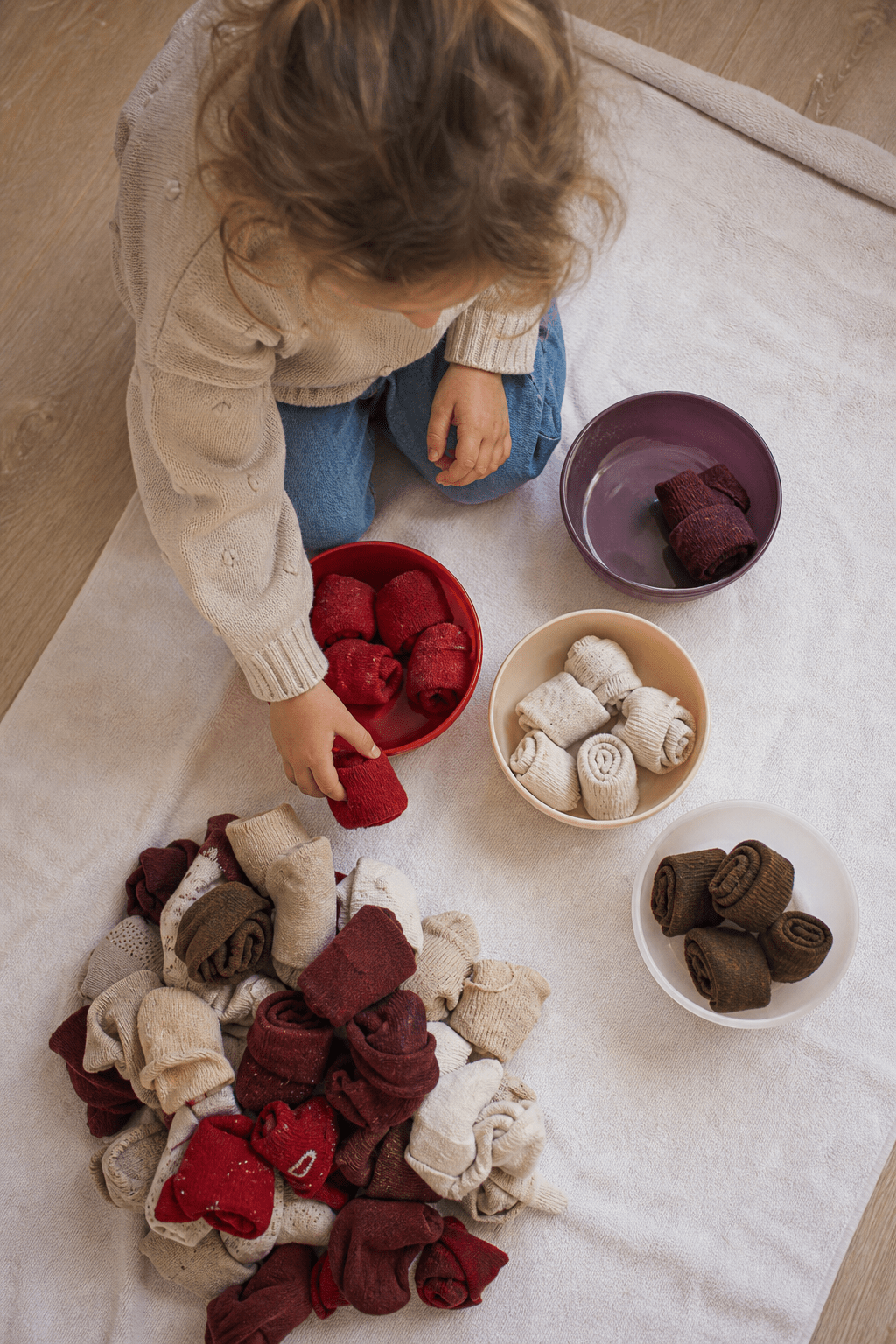
Roll red, burgundy, cream, and brown socks into soft pretend cranberry and bread bundles. Place large color cards on a towel and ask your preschooler to sort, count, and pack each group into lightweight plastic bowls. They empty the bowls, make a new pattern, then unroll and pair the socks when the job is complete.
Why it works: The activity carries the Thanksgiving color theme without using small food pieces. Sorting, packing, emptying, patterning, and pairing provide several preschool-level steps.
Age range tweak:
- Age 3: Use two colors and four bundles.
- Age 4: Sort four colors and count each bowl.
- Age 5: Create a repeating pattern, write a quick tally, empty the bowls, and pair the socks.
8. Thanksgiving Menu Picture Board
Draw or print large pictures of a few foods that are actually planned, then tape them to a sturdy board with every rough edge covered. Your preschooler arranges the menu in serving order, circles a favorite with a chunky crayon, and adds one large drawing for something they hope is included. Place the board near the dining area, not in the active kitchen.
Why it works: The board helps the child understand what the adults are preparing and turns waiting into planning. Rearranging and drawing keep the activity hands-on without becoming a worksheet.
Cover every cardboard edge and keep the board, crayons, and child away from hot food, knives, appliances, and glass.
Age range tweak:
- Age 3: Choose between two large food pictures and add one crayon mark.
- Age 4: Arrange four pictures and explain the order.
- Age 5: Add labels, plan courses, ask a family member for input, and display the finished board.
9. Dinner Chime Helper
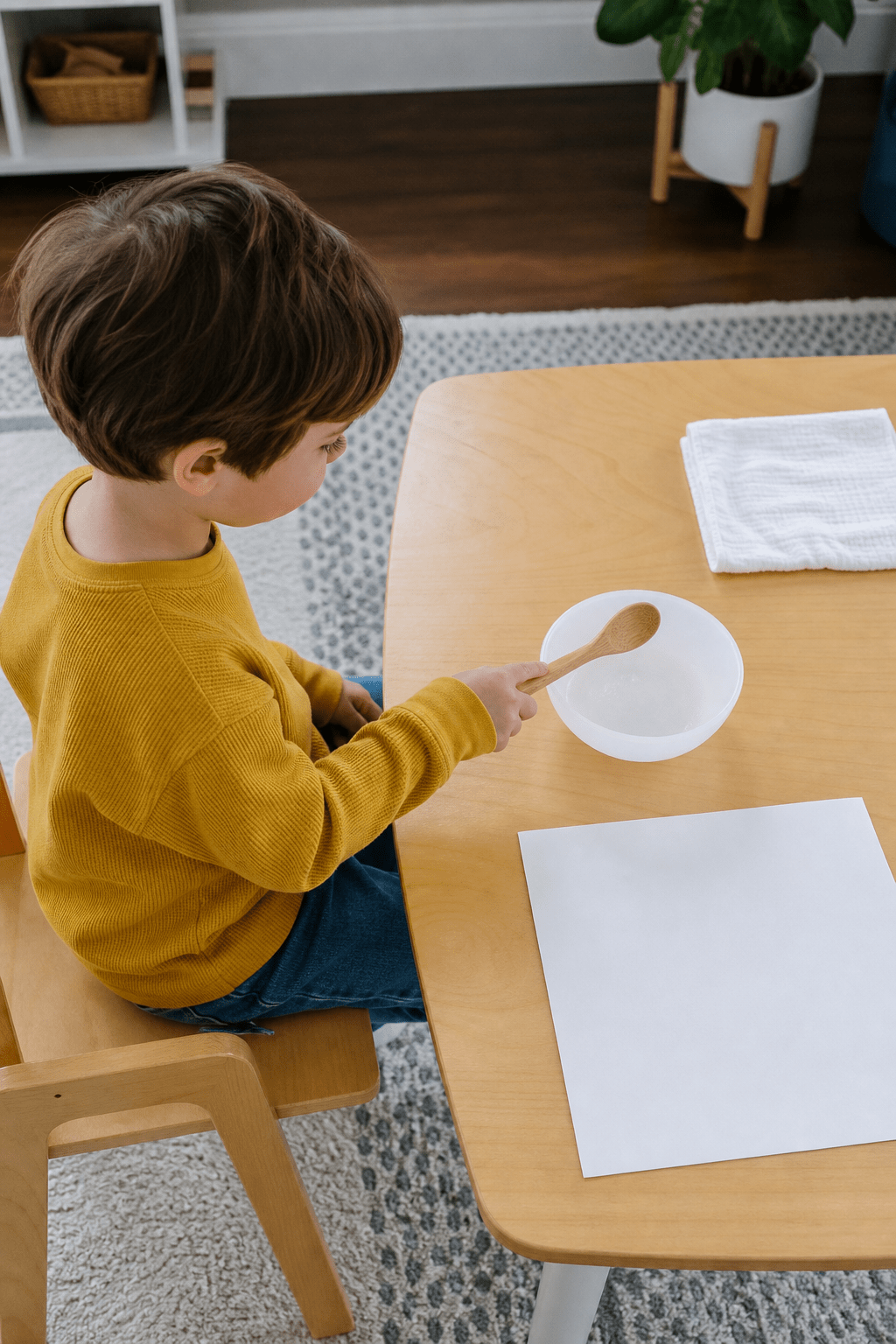
At a low table away from cooking, place one wooden spoon and one lightweight plastic bowl on a folded towel. When an adult says dinner is almost ready, your preschooler gives three gentle taps, carries a large paper dinner card to the family room, then returns the spoon to the towel. They can practice the sequence once before the real announcement.
Why it works: The child gets an important final job and a clear signal that the cooking activity is ending. The three-tap limit keeps the sound purposeful rather than becoming constant noise.
Use a lightweight plastic bowl, supervise the spoon, keep tapping gentle, and stay away from the kitchen, hot food, glass, and serving traffic.
Age range tweak:
- Age 3: Practice one gentle tap and carry the card with you.
- Age 4: Complete the three-tap and card-delivery sequence.
- Age 5: Create the dinner card, lead the announcement, check the rooms, and return the tools.
The Bottom Line
Thanksgiving cooking is easier for a preschooler when helping happens at a defined station outside the kitchen traffic. Folding napkins, sorting recipe cards, matching empty cups, preparing place cards, and building a menu are real contributions without exposure to heat or sharp tools.
Keep finished work on a tray so an adult can carry it where it belongs. Your child can feel connected to the meal without needing to follow you into every part of the cooking process.
One safe job at a time is enough. The goal is participation that helps the day, not a pretend cooking setup that creates another mess beside the real one.

Want to have these ideas in one place, customized for your kid in just a click? Grab our free Screen-Free Activity Finder.
One mom told us: "My kid was about to have a full meltdown and I had nothing. Pulled up the Screen Free Activity Generator and it gave me 'Tupperware Tower Challenge.' I dumped every plastic container from my kitchen on the floor and told her to stack them. She went from tears to totally absorbed in about 30 seconds. Spent 25 minutes stacking, crashing, matching lids. I just sat there drinking my coffee. Sometimes the simplest stuff works the best."
The Screen-Free Activity Finder is free. Put your email in below and we'll send it over.