
9 Fall Preschool Activities for Kids Who Struggle With Transitions
Transitions can turn ordinary preschool days into repeated battles. Your child may be happily playing until you say it is time to clean up, leave, wash hands, eat, or get dressed. Then the activity suddenly becomes the most important thing they have ever done, and every next step feels like a personal attack.
Preschoolers often handle transitions better when they can see what is ending, what comes next, and what small job connects the two. A verbal warning can disappear into play, but a leaf card, finish basket, short route, goodbye ritual, or stuffed bear ticket gives the change something concrete they can hold and complete.
These fall activities are not rewards for perfect cooperation. They are simple practice structures you can use during real parts of the day. Each one creates a visible ending, a bridge job, or a predictable reset. Over time, the same ritual can become familiar enough that your child needs less explaining and you do not have to invent a new strategy for every shift.
Make the ending and the next step visible
Use one transition tool repeatedly before adding another. Familiarity is what makes the card, basket, route, or ritual useful.
Keep the job short. The bridge should help your child move forward, not become a second activity they refuse to stop.
1. Fall First-Then Leaf Board
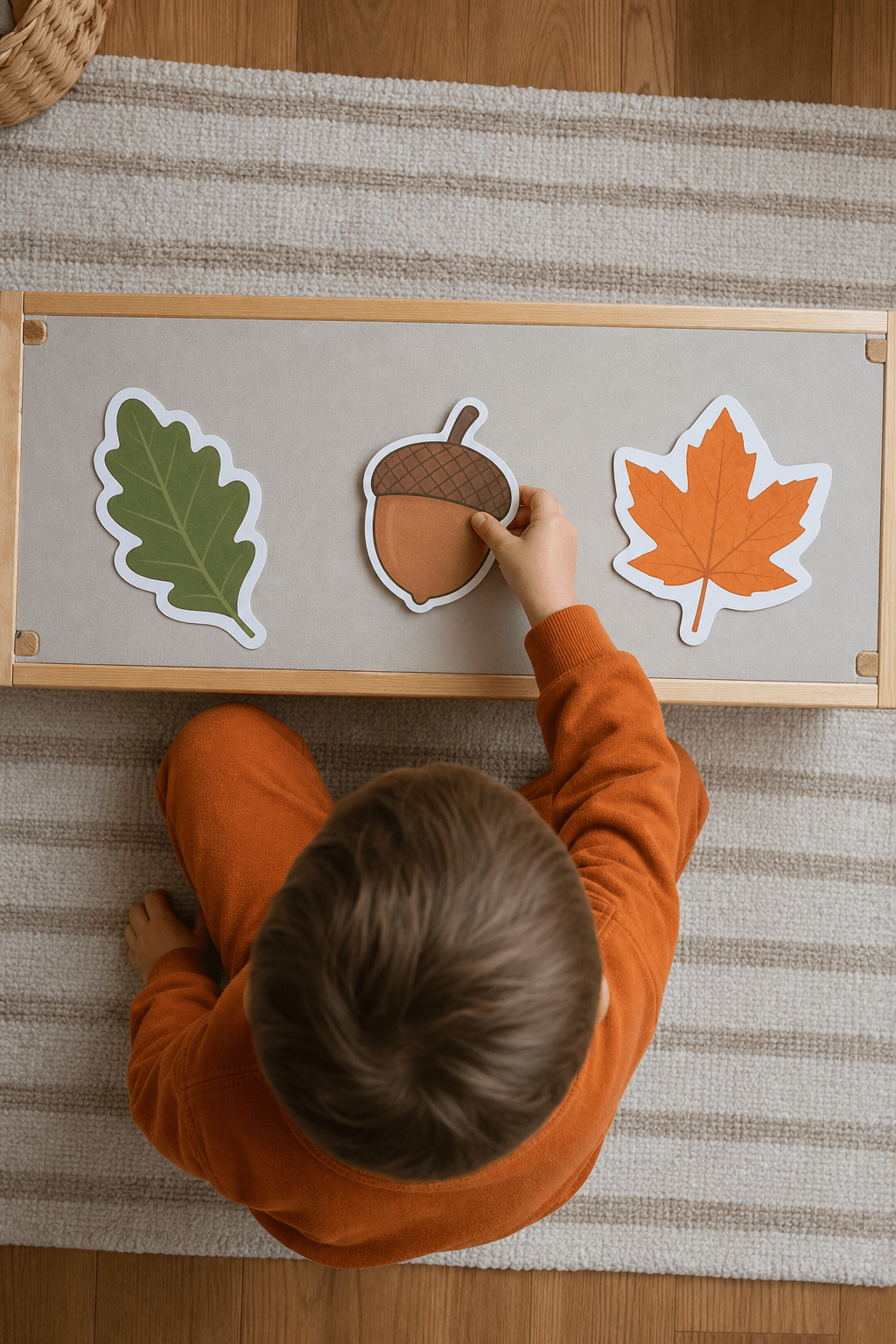
Draw two large leaves on a board. On the first leaf, place a picture of what is ending, such as blocks. On the second, place the next step, such as snack. Your preschooler moves one large paper acorn marker from first to then when the cleanup begins, turns the first picture face down, and carries the board to the snack table.
Why it works: The board turns a spoken transition into two visible steps. Moving the marker gives the child one concrete action between stopping and starting.
Keep every paper piece oversized and remove any damaged piece immediately.
Age range tweak:
- Age 3: Use two familiar picture cards and move the marker together.
- Age 4: Let them turn over the finished step and carry the board.
- Age 5: Let them help choose pictures, explain first and then, manage the marker, and reset the board.
2. Apple Job Finish Basket
Place a small basket with three large paper apples beside the current play area. Each apple shows one finish job: return pieces, check the floor, or carry the basket home. Your preschooler completes one card at a time and places it in the basket. When all three apples are inside, the activity is officially finished and the basket travels to the next room.
Why it works: The cleanup becomes a short sequence with a visible final card instead of one vague command. Carrying the basket creates the bridge to the next space.
Age range tweak:
- Age 3: Use two cards with simple pictures and finish together.
- Age 4: Use all three and let them place each completed card in the basket.
- Age 5: Let them create a job card, lead the sequence, inspect the area, and carry the basket forward.
When You Need More Screen-Free Ideas

We made a free Screen-Free Activity Finder for exactly this. Pick your child's age, how much time you have, how much energy they have, and how much help you can give. It'll send you screen-free activity ideas that use normal home materials.
Drop your email and we'll send it over. Unsubscribe anytime.
3. Sweater Changeover Station
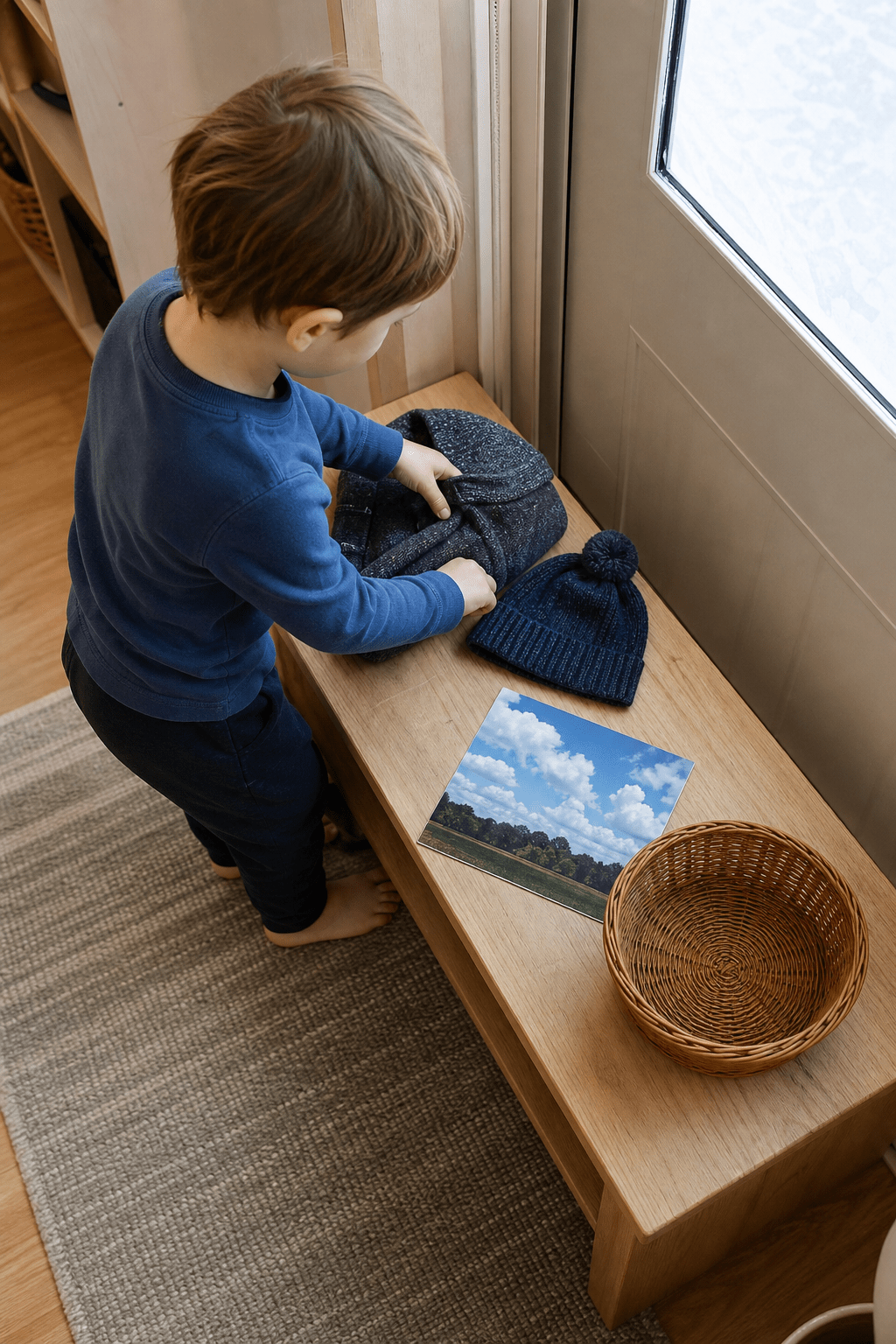
Set a child-size sweater, soft hat, and empty basket on a low bench near the door. Before leaving, your preschooler follows the same three steps: choose the needed item, put it on, and place the unused item in the basket. When they return, the sequence reverses. A large weather card shows which item is needed that day.
Why it works: The station makes leaving and returning more predictable because the clothing has a fixed place and order. The weather card gives the choice a reason instead of making it feel arbitrary.
Use clothing with no long cords, loose buttons, or tight openings, and keep the bench out of the doorway traffic.
Age range tweak:
- Age 3: Use one easy clothing item and guide the same sequence.
- Age 4: Use two items and let them read the picture card.
- Age 5: Let them check the weather, choose, dress, store extras, and reset the station after returning.
4. Leaf Cleanup Song Path
Place three large paper leaves in a row from the play area to the storage shelf, secured flat on a clear low-pile carpet. Sing the same short cleanup line as your preschooler carries one item to its home, touches each leaf with a foot beside the path, and returns. After the last item, they collect the leaves into a folder and the song ends.
Why it works: The repeated song and route signal that play is closing, while the leaf collection creates a final action. The child knows exactly when the transition is over.
Keep paper flat and non-slip on a dry clear carpet, remove loose tape, and stay away from stairs, pets, glass, breakables, and furniture edges.
Age range tweak:
- Age 3: Use two leaves and carry two large items together.
- Age 4: Use three leaves and repeat the same line for several deliveries.
- Age 5: Let them lead the song, choose the delivery order, inspect the room, and collect the path.
5. Scarecrow Goodbye Wave
Use a large paper scarecrow card as the goodbye signal for a favorite activity. Your preschooler gives the toys three waves, chooses one item to place in the basket last, turns the scarecrow face down, and carries it to the next room. The same card can signal goodbye to the park bag, bath toys, books, or screen-free play.
Why it works: A short goodbye ritual acknowledges that the child is stopping something they like. Turning the card face down makes the ending visible without stretching it into a long negotiation.
Age range tweak:
- Age 3: Wave once, put one item away, and turn the card together.
- Age 4: Complete the full three-step ritual.
- Age 5: Let them choose the final item, say the goodbye phrase, carry the card, and reset it for later.
6. Two-Stop Harvest Route
Choose two transition stops between rooms, such as a folded towel for shoes and a basket for the backpack. Give your preschooler one large harvest route card showing both pictures. They complete stop one, flip that side down, move to stop two, then place the whole card in a finished pocket near the destination.
Why it works: Two stops are easier to hold than a chain of spoken directions. Flipping each picture gives immediate evidence that the child is moving forward.
Keep the route short, dry, and away from stairs, doors, pets, glass, luggage, and furniture edges.
Age range tweak:
- Age 3: Use one picture stop and carry the card together.
- Age 4: Use both stops and let them flip each finished picture.
- Age 5: Let them help choose the route, draw the pictures, check both stops, and store the card.
7. Stuffed Bear Transition Ticket
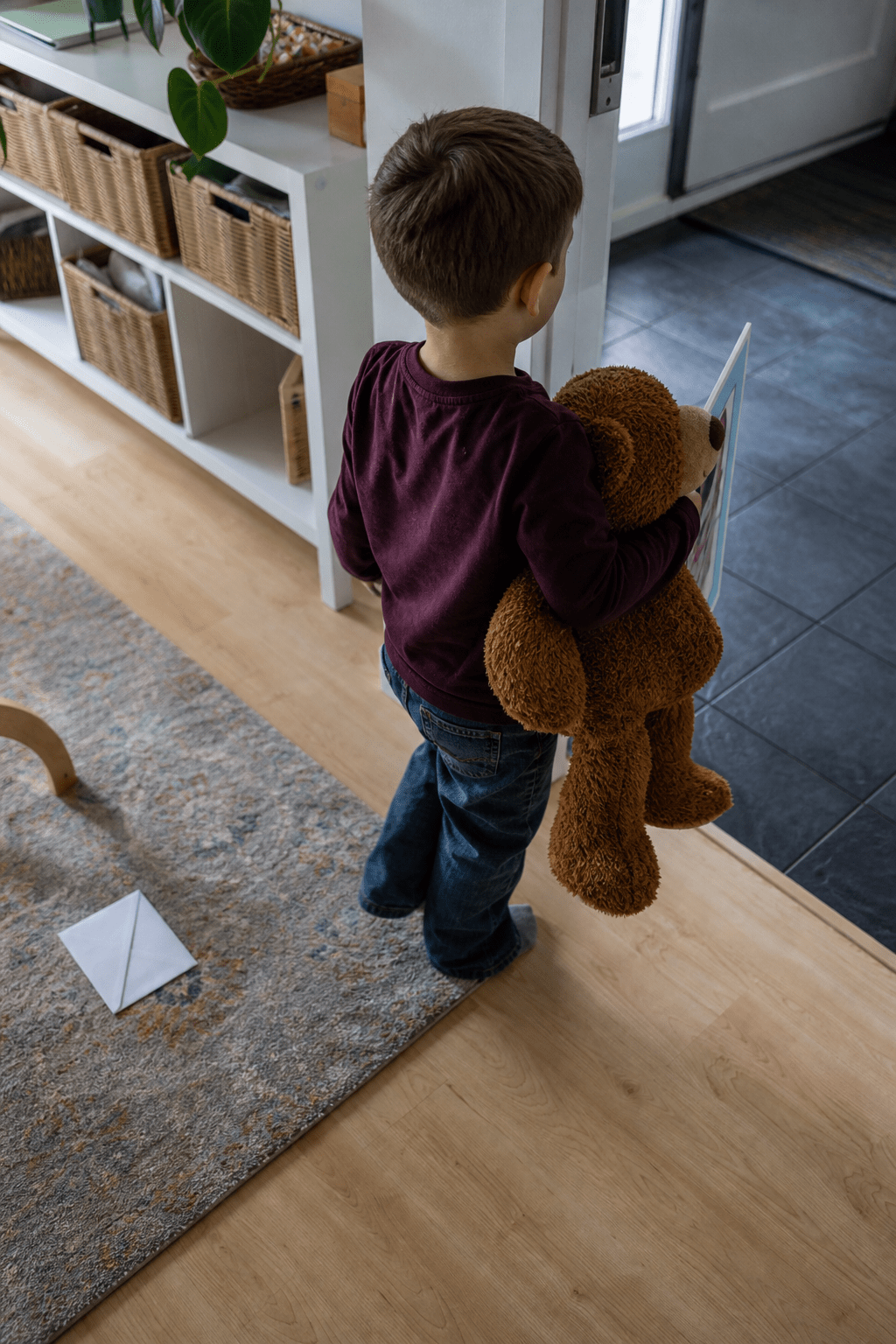
Give a large stuffed bear a big paper ticket showing the next activity, such as bath, dinner, car, or bedtime book. Your preschooler helps the bear finish the current job, punches the ticket with a chunky crayon mark, and carries the bear to the next space. The ticket goes into a finished envelope when the bear arrives.
Why it works: Helping the bear transition can lower the pressure on the child and turn the next step into a shared mission. The ticket creates a clear departure and arrival.
Use a large stuffed animal with no loose parts and keep the route clear.
Age range tweak:
- Age 3: Use one picture ticket and move the bear together.
- Age 4: Let them mark the ticket and guide the bear to the next room.
- Age 5: Let them make the ticket, announce the transition, help the bear arrive, and file the ticket.
8. Fall Choice Card Handoff
Prepare two large fall cards showing acceptable versions of the next step, such as hop to the bathroom or carry the towel, red cup or green cup, one last block or one last car. Your preschooler chooses a card, hands the other back to you, completes the choice, and places the used card in a finished basket.
Why it works: The child gets control inside a transition that is still happening. Handing back the unused card closes the decision before the next step begins.
Age range tweak:
- Age 3: Offer two picture choices and help complete the selected one.
- Age 4: Let them choose, return the extra card, and place the used card in the basket.
- Age 5: Let them suggest safe choices, create a card, explain the plan, and reset the pair.
9. Pumpkin Patch Reset Ritual
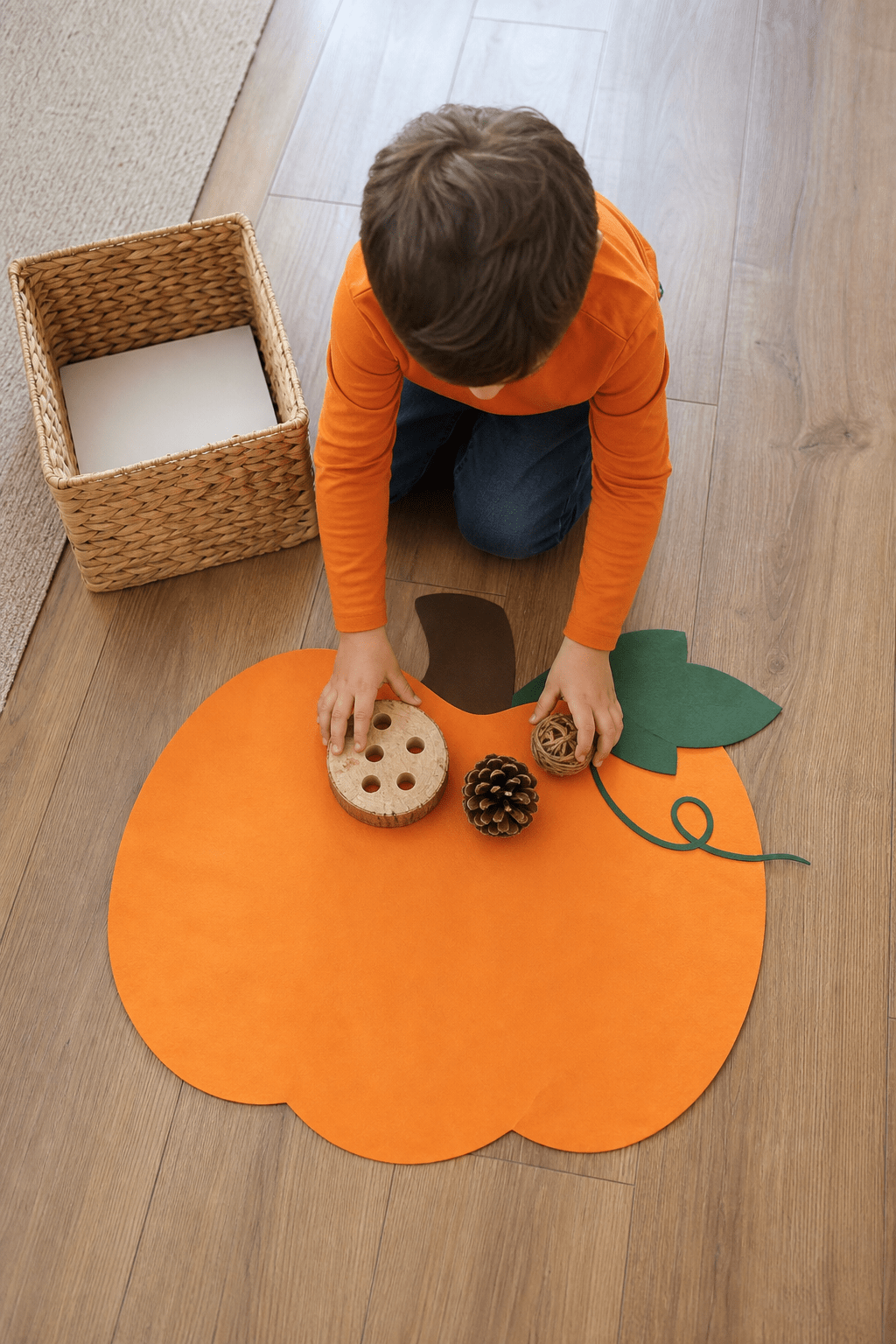
Use one large paper pumpkin as the reset mat for the end of any activity. Your preschooler places the final three materials on the pumpkin, names where each one belongs, carries them home one at a time, then folds the paper pumpkin and puts it in a drawer. Say the same short closing phrase each time, such as, 'The patch is clear.'
Why it works: The ritual gives different activities the same familiar ending. Three final items keep the cleanup manageable, and folding the pumpkin marks the transition as complete.
Keep the paper mat flat on a dry surface and replace it if it becomes torn or slippery.
Age range tweak:
- Age 3: Use one final item and fold the pumpkin together.
- Age 4: Use three items and repeat the same closing phrase.
- Age 5: Let them choose the final three, direct where they go, inspect the space, and store the mat.
The Bottom Line
Transitions get easier when the child can see the ending, the next step, and the small job that connects them. A first-then board, finish basket, route card, goodbye ritual, or stuffed bear ticket makes the change concrete.
Use the same tool often enough that it becomes familiar. A transition support works because the child recognizes the pattern, not because it is new or exciting every time.
Keep the bridge short and finish it completely. When the card goes into the basket or the pumpkin mat folds away, the old activity is done and the next part can begin.

Want to have these ideas in one place, customized for your kid in just a click? Grab our free Screen-Free Activity Finder.
One mom told us: "My kid was about to have a full meltdown and I had nothing. Pulled up the Screen Free Activity Generator and it gave me 'Tupperware Tower Challenge.' I dumped every plastic container from my kitchen on the floor and told her to stack them. She went from tears to totally absorbed in about 30 seconds. Spent 25 minutes stacking, crashing, matching lids. I just sat there drinking my coffee. Sometimes the simplest stuff works the best."
The Screen-Free Activity Finder is free. Put your email in below and we'll send it over.