
9 Fall Preschool Activities for Kids Wired After School
Some preschoolers leave school looking tired, then hit the front door and turn into a different child. They run laps, jump off cushions, shout every thought, crash into furniture, and seem unable to hear the request to take off their shoes. The school day required a lot of control, and the energy can come out all at once when they feel safe again.
A wired child usually needs movement before a quiet table activity has much chance. The movement still needs boundaries, though. Random running through the house can make the afternoon less safe and harder to bring back down. Short delivery routes, pushes, squats, animal walks, drum marches, and cleanup relays give the body strong work with a visible start and finish.
These fall activities are designed for one clear room, hallway, or dry outdoor area. They use soft items, firm small pumpkins, baskets, cushions, paper cards, and lightweight tools. Each one has a built-in slower ending so the child can release energy without staying at full speed until dinner.
Use big movement with a clear route and a slower finish
Clear the space first and show the whole route before the child starts. A wired preschooler is more likely to stay safe when the path and stopping point are obvious.
End every movement activity with a reset: pair the socks, stack the cards, fold the towel, or carry the basket home. The final job helps the body shift gears.
1. Leaf Delivery Fast-Slow
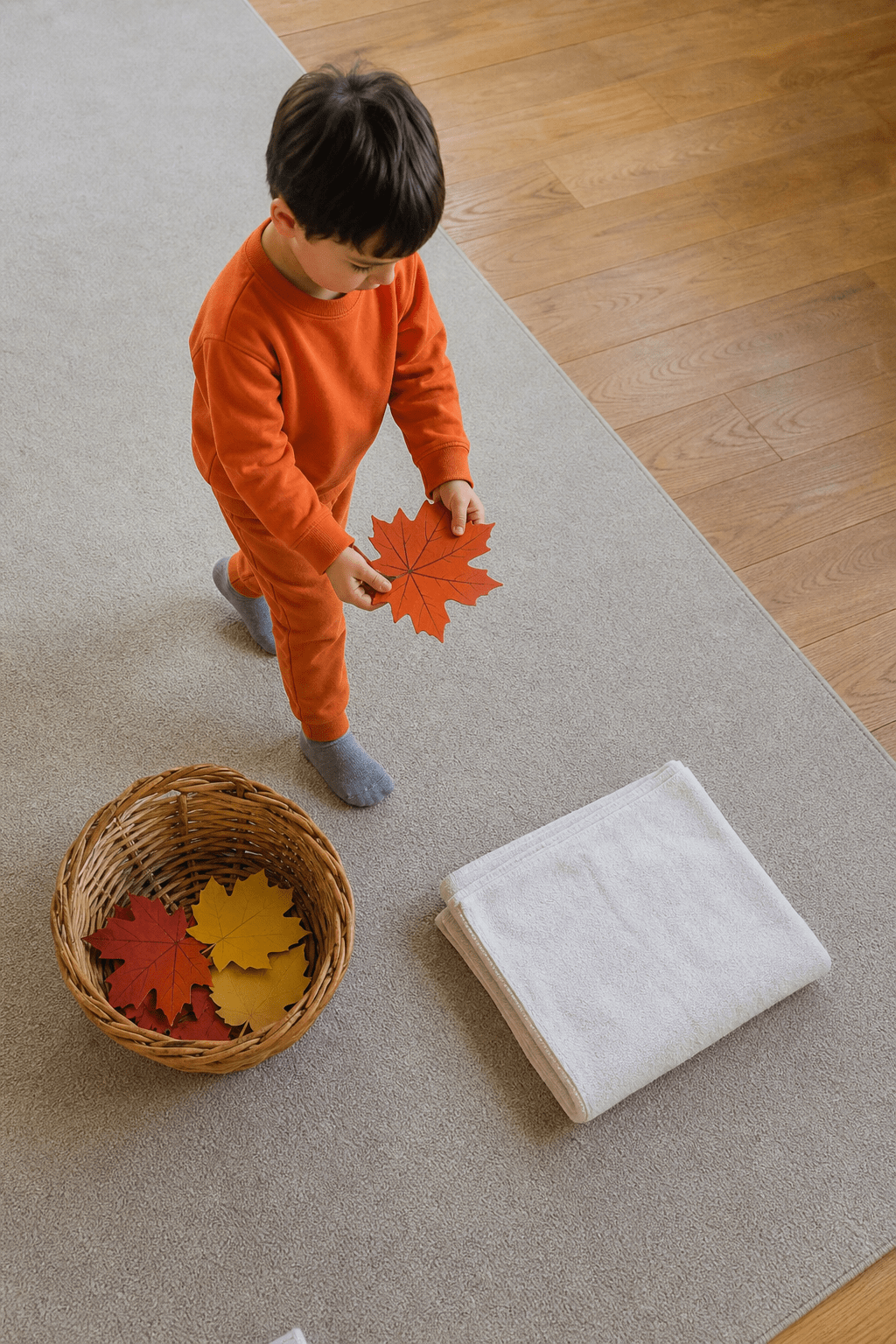
Place six large sturdy paper leaves in a basket and set a folded towel delivery spot across a clear carpet. Your preschooler carries one leaf quickly to the towel, walks slowly back, and repeats. Halfway through, switch the rule so the delivery is slow and the return is a normal walk. Finish by stacking the leaves in the basket.
Why it works: Alternating fast and slow makes the child notice pace instead of only chasing speed. One leaf at a time keeps the route organized and creates repeated starts and stops.
Use a dry clear surface, keep the route away from stairs, furniture edges, pets, glass, and breakables, and remove damaged paper immediately.
Age range tweak:
- Age 3: Use three leaves and walk both directions with you nearby.
- Age 4: Use six leaves and follow the fast-slow rule.
- Age 5: Let them design a safe pace pattern, lead the route, and handle the full reset.
2. Pumpkin Push Course
Place one small firm pumpkin on a clear low-pile carpet with three wide towel gates. Your preschooler pushes the pumpkin slowly with both hands through each gate, walks around it, and guides it back to the starting basket. Change one gate position for a second round, then carry the pumpkin home with two hands.
Why it works: Pushing gives the upper body strong work, while the gates prevent the activity from becoming a wild roll across the room. Guiding it back adds a slower control phase.
Use a firm pumpkin with no loose stem, keep the surface flat and dry, and stay away from stairs, pets, glass, and furniture edges.
Age range tweak:
- Age 3: Use one nearby towel gate and push from kneeling.
- Age 4: Use three gates and guide the pumpkin through the full course.
- Age 5: Let them arrange safe gates, time a controlled round, inspect the route, and reset it.
When You Need More Screen-Free Ideas

We made a free Screen-Free Activity Finder for exactly this. Pick your child's age, how much time you have, how much energy they have, and how much help you can give. It'll send you screen-free activity ideas that use normal home materials.
Drop your email and we'll send it over. Unsubscribe anytime.
3. Apple Basket Squat and Carry
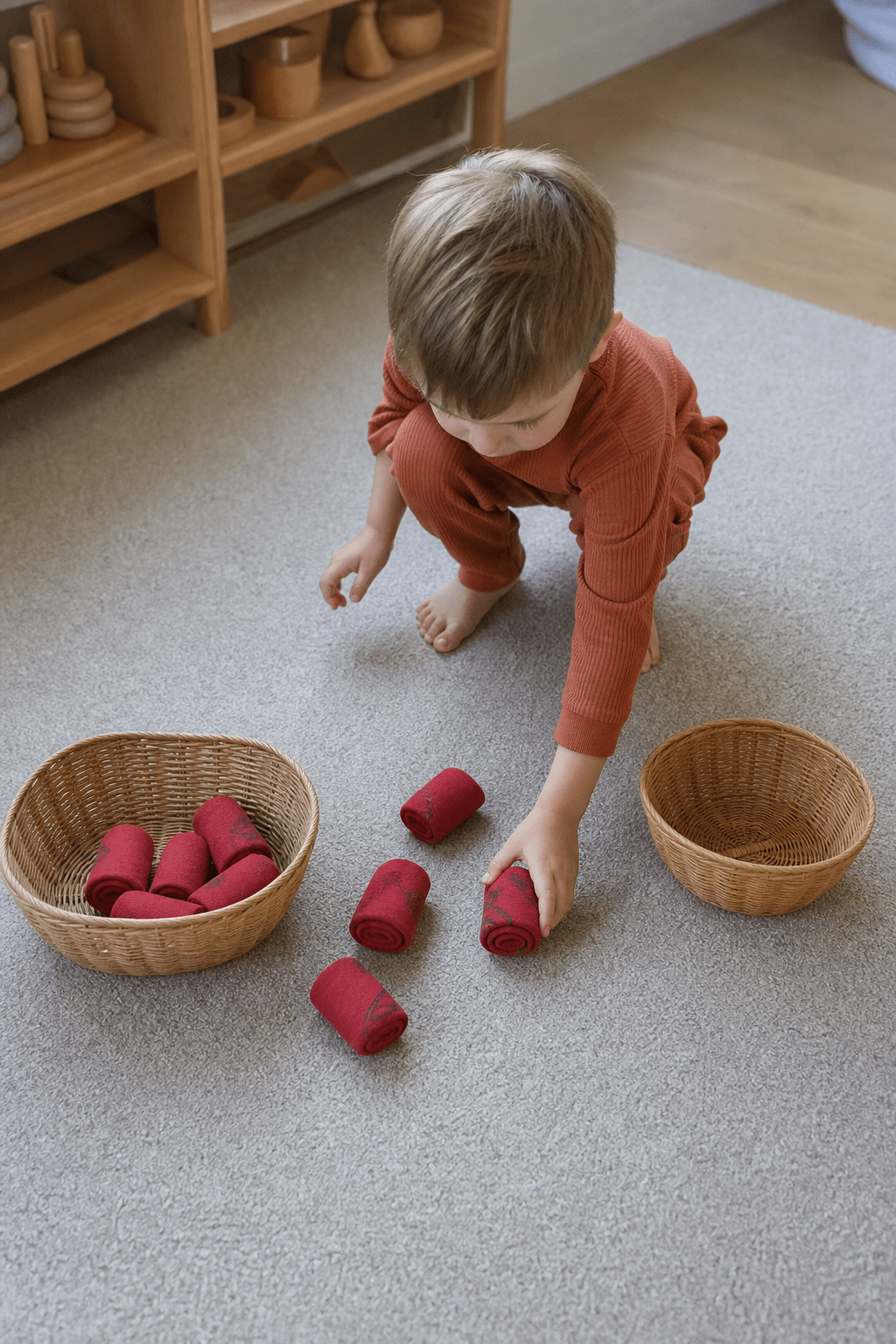
Put four rolled red sock apples in a low basket and place an empty basket a few steps away. Your preschooler squats to pick up one apple, stands, carries it with two hands, and squats to place it in the second basket. After all four move, they reverse the route and finish by unrolling and pairing the socks.
Why it works: The repeated squat and carry gives large-muscle work without encouraging running. Reversing the baskets doubles the loop, and pairing creates a calm finish.
Use soft lightweight bundles and a clear dry floor.
Age range tweak:
- Age 3: Use two bundles and keep the baskets close.
- Age 4: Use four bundles and complete both directions.
- Age 5: Let them count repetitions, plan the basket spacing, lead the return route, and pair the socks.
4. Scarecrow Jump-and-Freeze
Place three large paper scarecrow cards flat on a clear carpet and secure them with short painter tape loops. Each card shows a movement: two-foot jump, arms-wide freeze, or slow knee lift. Your preschooler moves to one card, completes the action, freezes for a count of three, then walks to the next. Collect the cards after two rounds.
Why it works: The jumps release energy, but every card also includes a pause or slow move. The visible sequence reduces random movement and gives the game a clear ending.
Keep cards flat and non-slip, use short tape pieces, and keep the route away from stairs, pets, glass, breakables, and furniture edges.
Age range tweak:
- Age 3: Use two cards and hold hands for balance if needed.
- Age 4: Use all three and complete two controlled rounds.
- Age 5: Let them create a safe fourth card, lead the count, and collect all tape and paper.
5. Squirrel Sock Stash Dash
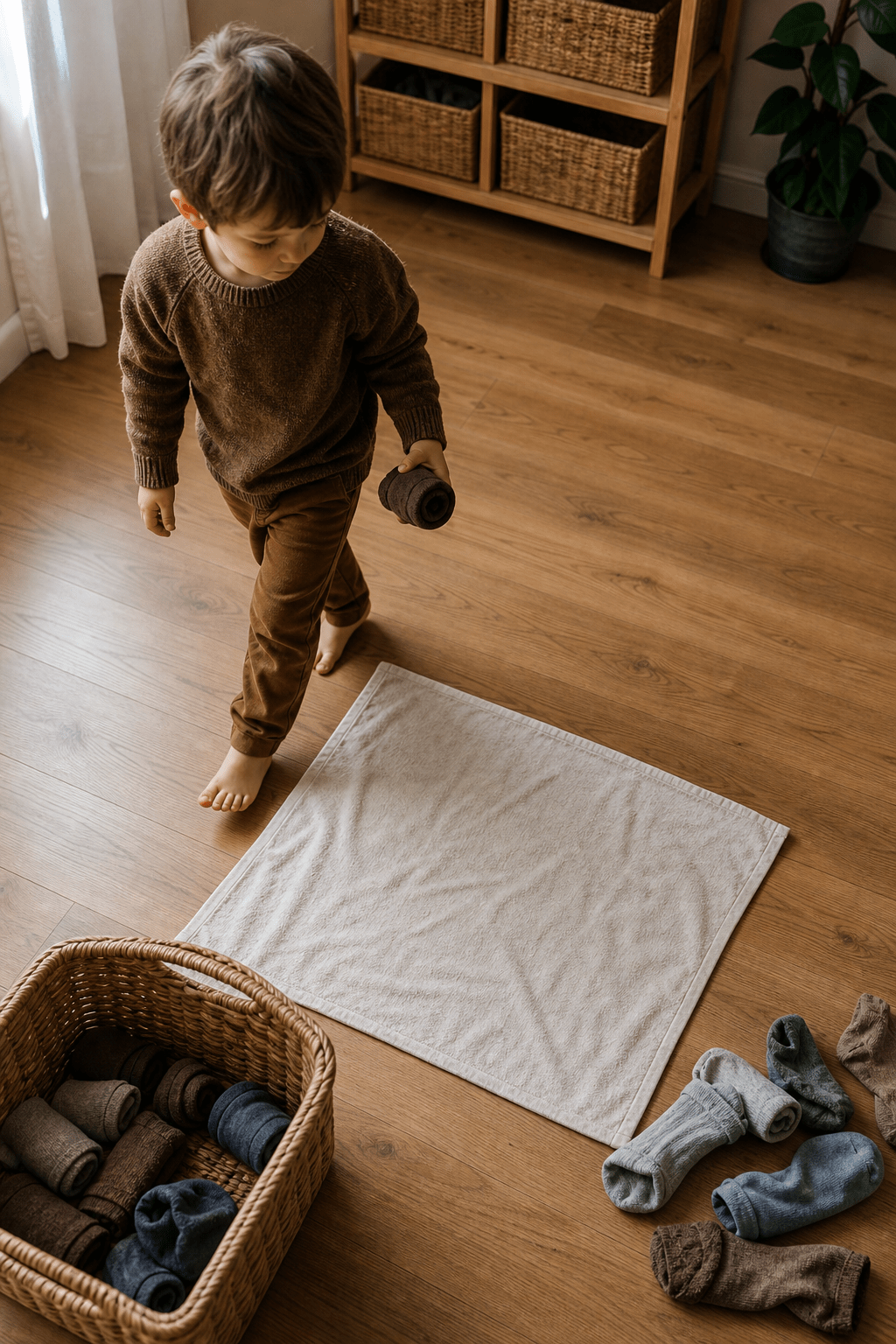
Scatter five rolled brown sock bundles at visible spots around one clear room, never behind furniture or near hazards. Your preschooler finds one stash, carries it to the squirrel basket, touches the basket, then walks to the center towel before searching again. After every stash is collected, they empty the basket and pair the socks slowly.
Why it works: Searching and carrying satisfy the need to move, while the center towel creates a reset between trips. The slow sock pairing helps the activity come down at the end.
Keep every bundle visible and the search away from stairs, doors, pets, glass, cords, and furniture climbing.
Age range tweak:
- Age 3: Use three obvious bundles close to the basket.
- Age 4: Use five visible spots and return to the center towel each time.
- Age 5: Let them hide safe bundles for you, check the room, count the stash, and pair the socks.
6. Sweater Weather Cushion Trail
Arrange three flat couch cushions on a clear carpet with wide spaces and an open exit. Your preschooler carries a child-size sweater across the low path, places it in a laundry basket, then walks around the cushions to collect another soft item. After three deliveries, they fold the sweater and return every cushion to the couch.
Why it works: The trail gives balance and carrying work, but the delivery job keeps the movement purposeful. Returning the cushions builds the slower finish into the same activity.
Keep cushions low and stable, exits open, and the route away from lamps, heaters, windows, cords, stairs, pets, glass, and furniture edges.
Age range tweak:
- Age 3: Use two flat cushions and one soft delivery with an adult beside them.
- Age 4: Use three cushions and complete three delivery rounds.
- Age 5: Let them inspect spacing, plan the order, deliver, fold, and restore the room.
7. Harvest Animal Walk Cards
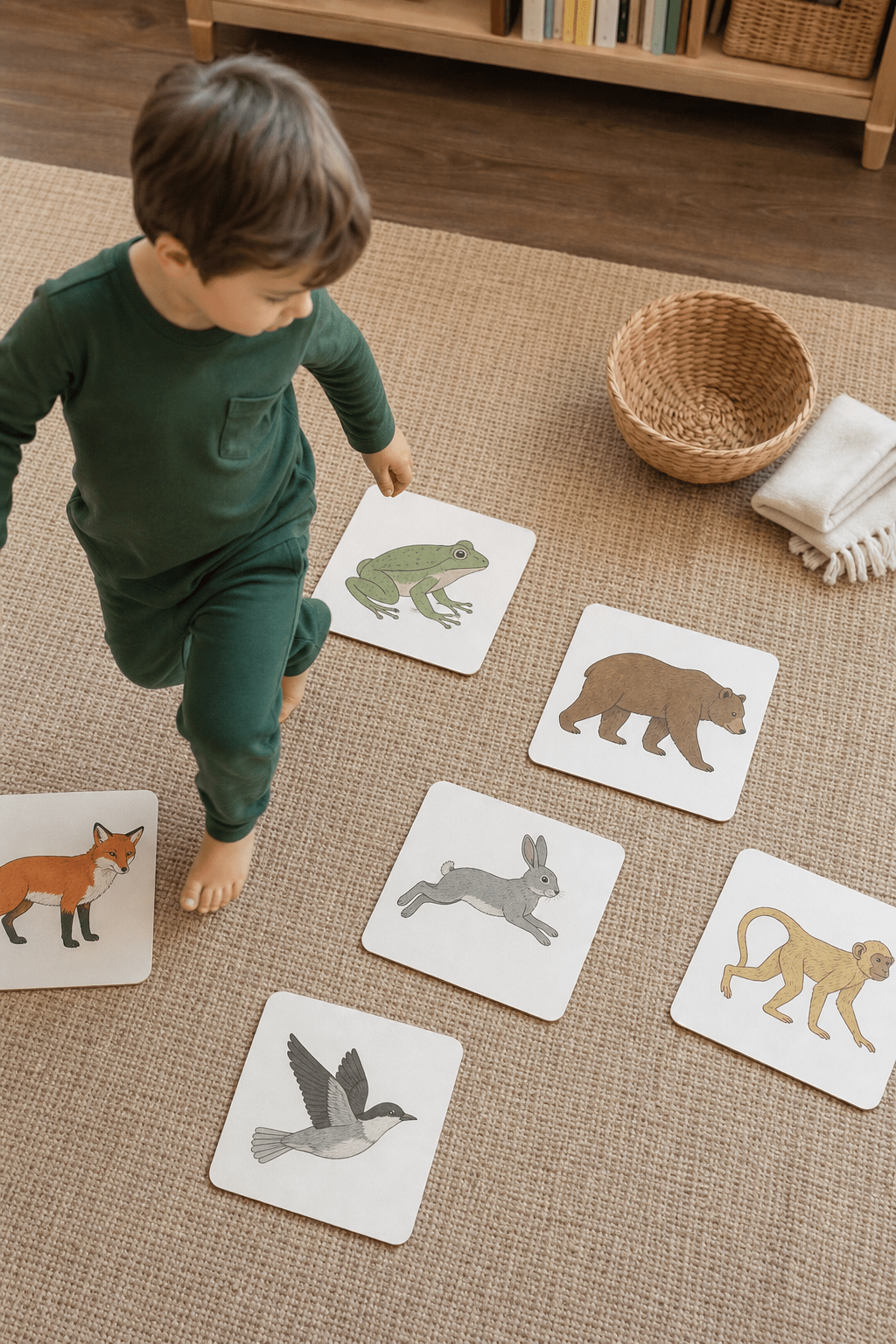
Use four large cards showing a squirrel crawl, bear walk, turkey step, and slow deer tiptoe. Your preschooler chooses one card, travels from a basket to a folded towel, places the card down, and walks normally back for the next. After all four, they stack the cards and choose one slow movement for the final trip.
Why it works: Different movement patterns give the body varied work, while the card delivery keeps each round short and visible. The final slow trip helps lower the pace.
Choose movements that fit your child's balance and keep the floor dry, clear, and away from hazards.
Age range tweak:
- Age 3: Use two easy movements across a very short route.
- Age 4: Use all four cards and walk back normally between rounds.
- Age 5: Let them create a safe animal card, lead the sequence, and organize the stack.
8. Fall Drum March
Place one lightweight plastic bowl on a folded towel with one wooden spoon. Your preschooler taps a slow fall marching beat, walks one short lap around the towel, returns the spoon, and freezes. Repeat with a fast beat followed by a deliberately slow final beat. The bowl and spoon go back into the basket when the concert ends.
Why it works: The rhythm lets a loud, wired child use sound and movement inside a controlled loop. Returning the spoon after each lap prevents the activity from becoming nonstop banging.
Supervise the spoon, use a lightweight plastic bowl, protect ears with a comfortable volume, and keep the march route clear.
Age range tweak:
- Age 3: Tap three times and walk one small circle together.
- Age 4: Alternate slow and fast rounds with clear stops.
- Age 5: Let them create a beat pattern, lead the march, choose the slow ending, and put the tools away.
9. Sunset Cleanup Relay
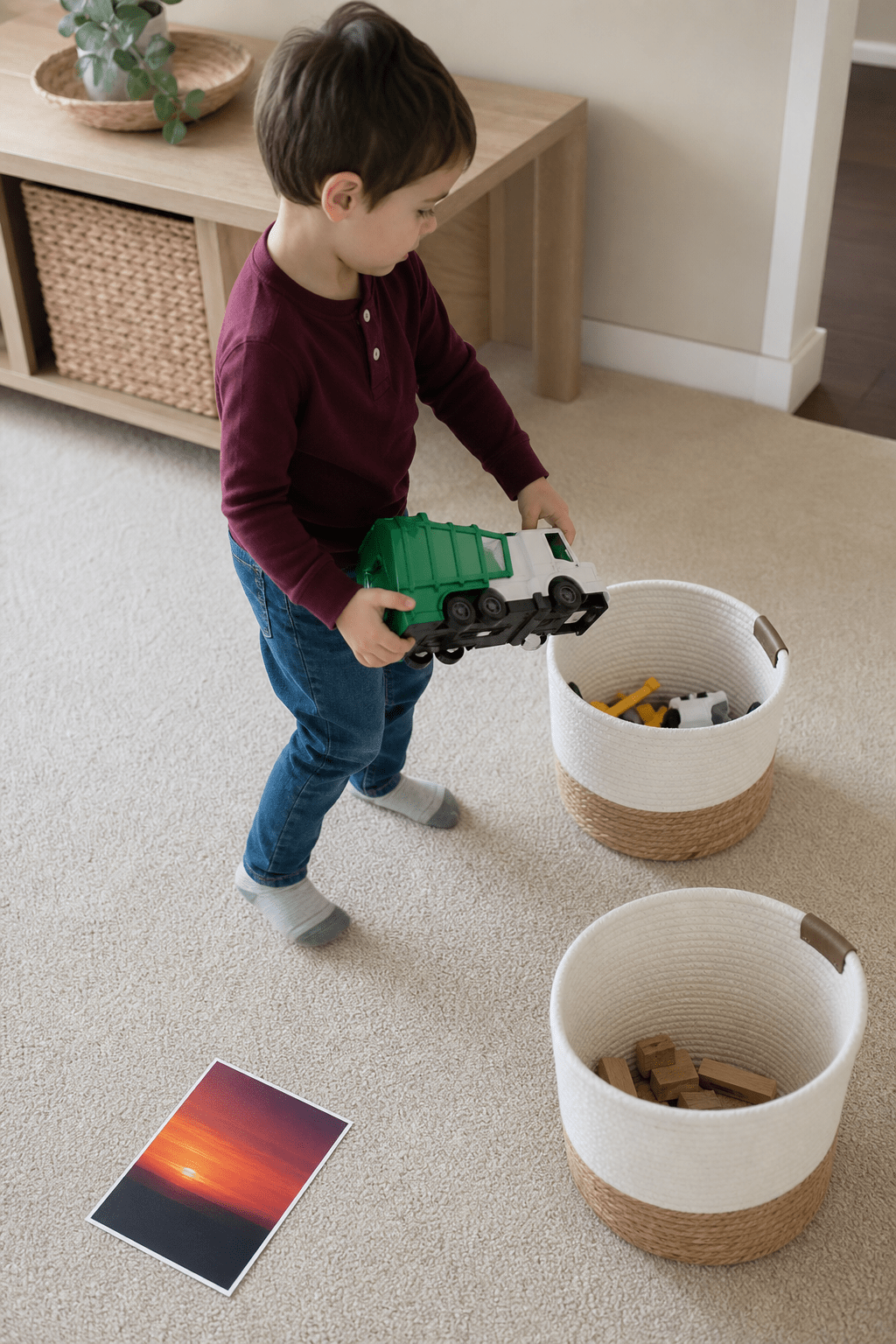
Choose six large safe items already out in one room, such as books, blocks, socks, and a soft hat. Place two baskets a short distance apart. Your preschooler carries one item to its home basket, returns to touch the sunset card, then chooses the next. When the room is clear, they walk one slow inspection lap and put the card away.
Why it works: The relay uses leftover energy on a job that improves the room, and the one-item rule keeps it from becoming frantic. The inspection lap is a natural slowdown and finish.
Use only lightweight nonbreakable items and keep the route away from stairs, doors, pets, glass, and furniture edges.
Age range tweak:
- Age 3: Use three large items and one nearby basket.
- Age 4: Use six items and return to the card after each delivery.
- Age 5: Let them choose categories, plan the route, inspect the room, and store the card.
The Bottom Line
A preschooler who is wired after school usually needs purposeful movement before they can settle. Pushing, carrying, squatting, marching, jumping, and animal walks can release that energy without turning the whole house into a chase.
Keep the route visible and end with a slower reset. Pair the socks, stack the cards, fold the sweater, inspect the room, or return the bowl to the basket.
The activity does not need to exhaust them. It needs to give the stored-up energy a safe path out and make the next part of the afternoon easier to reach.

Want to have these ideas in one place, customized for your kid in just a click? Grab our free Screen-Free Activity Finder.
One mom told us: "My kid was about to have a full meltdown and I had nothing. Pulled up the Screen Free Activity Generator and it gave me 'Tupperware Tower Challenge.' I dumped every plastic container from my kitchen on the floor and told her to stack them. She went from tears to totally absorbed in about 30 seconds. Spent 25 minutes stacking, crashing, matching lids. I just sat there drinking my coffee. Sometimes the simplest stuff works the best."
The Screen-Free Activity Finder is free. Put your email in below and we'll send it over.