
9 Fall Preschool Activities Using Leaves, Pumpkins, and Apples
Leaves, pumpkins, and apples are the fall materials preschoolers notice first. They are easy to recognize, they feel different in the hands, and they can support far more than one seasonal craft. The problem is that many ideas use them once, create a pile of scraps or paint, and finish before your child has really explored anything.
These activities use the three materials for observing, sorting, drawing, measuring, patterning, rolling, printing, storytelling, and pretend market jobs. The fall theme stays connected to the actual object instead of being added to a generic activity name. Household versions are included when real produce or outdoor leaves are not practical.
Keep the material set small and choose firm, intact items. Large leaves work better than brittle pieces, small pumpkins should have secure stems, and apples should be washed and used with supervision if they will be handled as food. With a towel, paper, crayons, blocks, and a basket, the same three fall materials can support a whole range of preschool-level play.
Use each fall material for more than one kind of job
Start with one object and one question. What do you notice, where does it belong, how far can it roll, what pattern can it make, or what story can it support?
Return real food to storage, outdoor leaves to the yard, and reusable materials to one basket. The reset keeps the exploration useful instead of letting it spread across the room.
1. Leaf Vein Crayon Rubbing
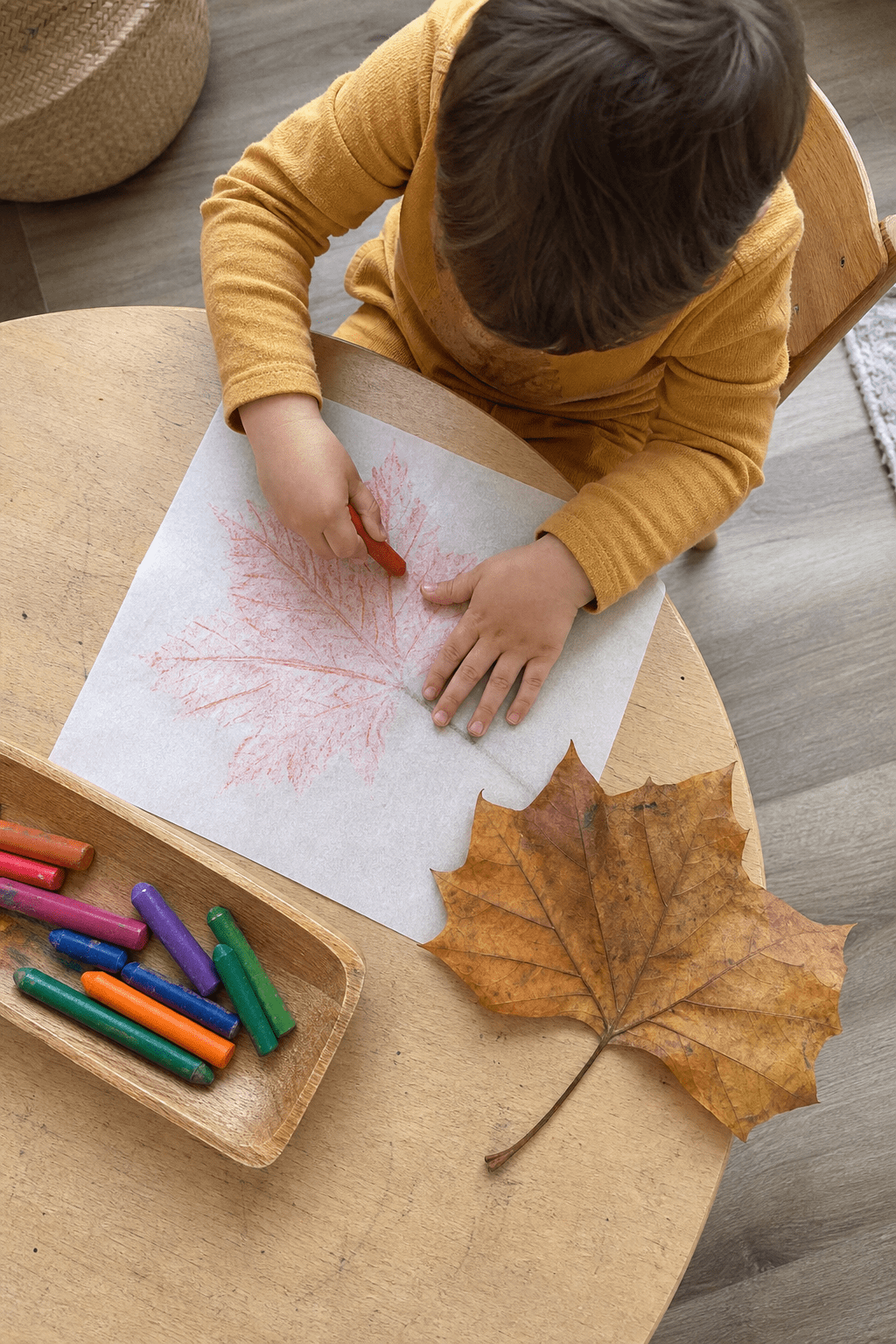
Place one large flexible leaf vein-side up under a sheet of paper and secure the paper corners to a low table. Your preschooler rubs the side of a chunky crayon across the page until the veins appear, turns the leaf, and tries a second color. They circle the thickest vein, compare two sections, then return the intact leaf outside or to a nature tray.
Why it works: The leaf creates immediate visual feedback and invites close observation without tiny pieces. Turning it gives a second result from the same material.
Use a large flexible intact leaf, skip brittle pieces, and remove the leaf if it starts breaking.
Age range tweak:
- Age 3: Hold the paper and leaf steady while they rub one large section.
- Age 4: Let them reveal the full leaf and try two colors.
- Age 5: Let them compare vein patterns, add labels, and organize the page and leaf afterward.
2. Pumpkin Size Lineup
Set out three firm pumpkins or gourds that are clearly different sizes on a towel on the floor. Your preschooler lines them up from smallest to largest, moves a block tower beside each one to compare height, then changes the order and repairs it. Finish by carrying one light pumpkin at a time back to a stable storage spot with an adult nearby.
Why it works: The real objects make size comparison visible and physical. Reordering and checking with blocks creates more than one round.
Use stable firm pumpkins with secure stems, keep them on a low surface, and let an adult handle anything heavy.
Age range tweak:
- Age 3: Use two light pumpkins and name big and small.
- Age 4: Order three pumpkins and compare them with blocks.
- Age 5: Estimate, measure with equal blocks, record the order, and help return them safely.
When You Need More Screen-Free Ideas

We made a free Screen-Free Activity Finder for exactly this. Pick your child's age, how much time you have, how much energy they have, and how much help you can give. It'll send you screen-free activity ideas that use normal home materials.
Drop your email and we'll send it over. Unsubscribe anytime.
3. Apple Color Market Sort

Place red, green, and yellow apples or rolled sock apples in a basket with three large paper market signs. Your preschooler sorts the colors, counts each group, moves one group to a pretend customer tray, then restocks the market. If using real apples, wash them first and return them to food storage after the activity.
Why it works: Sorting becomes part of a market job with stocking and selling, so the activity continues beyond making three groups. The signs keep each category visible.
Stay nearby with real food, use firm washed apples, and return them to proper storage afterward.
Age range tweak:
- Age 3: Use two colors and one apple at a time.
- Age 4: Sort three colors, count each group, and complete one customer order.
- Age 5: Make price or quantity signs, run several orders, check inventory, and restock.
4. Leaf Window Gallery
Tape a large sheet of clear contact paper sticky-side out to a safely closed window at your child's chest height, with every edge secured by an adult. Offer four or five large flexible leaves or oversized paper leaves. Your preschooler arranges the gallery, removes and turns pieces, adds a paper title card, then helps peel the contact paper down when the display is finished.
Why it works: The light makes the leaf colors and shapes easy to compare, while the reusable sticky surface supports arranging and rearranging rather than one permanent collage.
Keep the window closed, prevent climbing access, supervise the sticky surface, and remove any brittle or damaged leaf immediately.
Age range tweak:
- Age 3: Use three oversized paper leaves and help press them onto the surface.
- Age 4: Use several large leaves and let them rebuild the arrangement.
- Age 5: Plan sections, add a title card, explain the display, and help with the safe reset.
5. Pumpkin Roll Measure
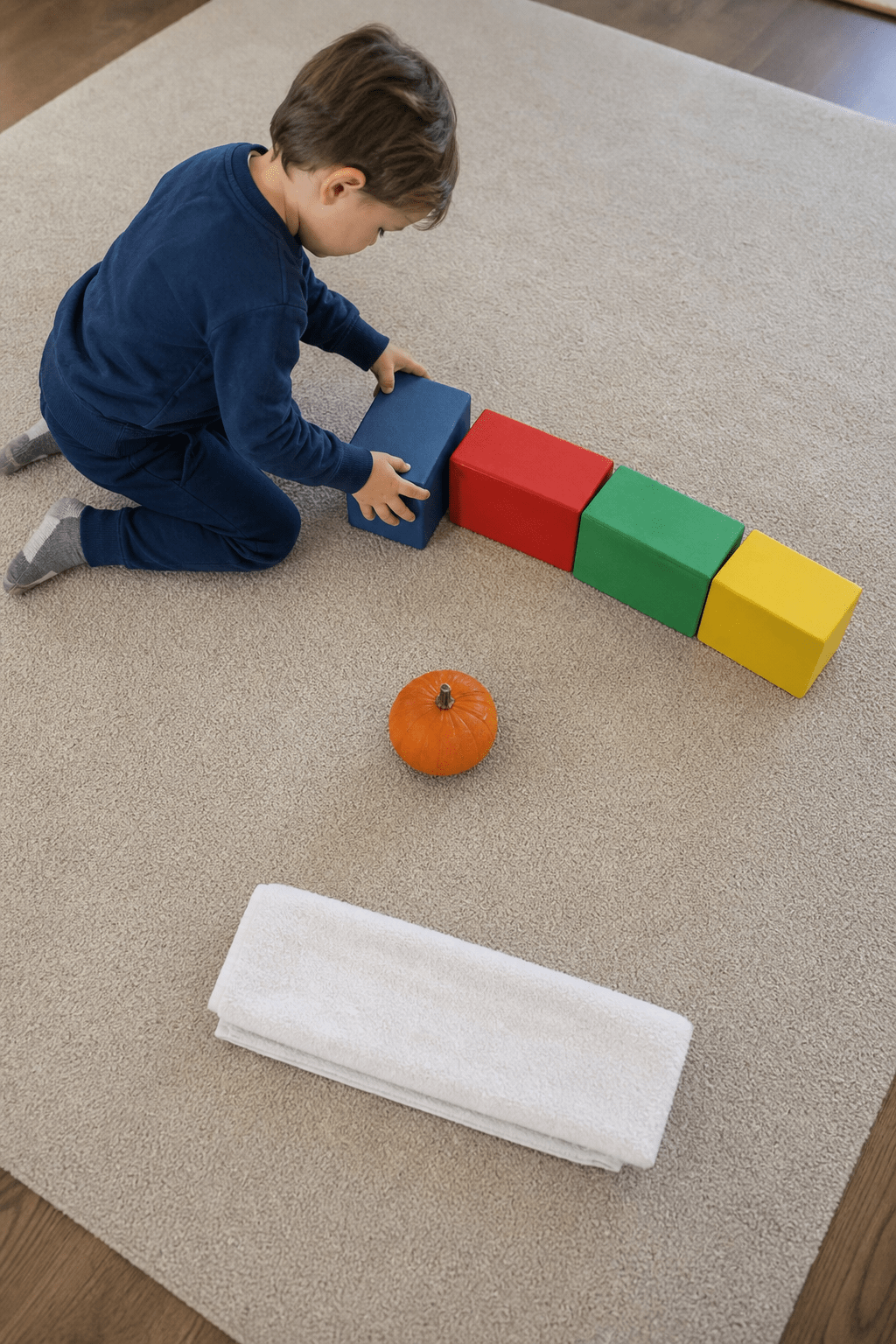
Place one small firm pumpkin on a clear low-pile carpet with a folded towel start line. Your preschooler gives one gentle push, marks the stopping point with a large block, and measures the distance using equal blocks laid end to end. They reset the pumpkin, change the strength of the push, and compare the two distances.
Why it works: Rolling produces an obvious result, and the block measure turns it into a simple preschool investigation. Resetting from the same towel line makes comparisons meaningful.
Keep the route flat, dry, and clear, use a firm pumpkin with no loose stem, and stay away from stairs, pets, glass, and furniture edges.
Age range tweak:
- Age 3: Roll a short distance and count two or three blocks together.
- Age 4: Complete two rolls and compare longer and shorter.
- Age 5: Predict, measure carefully, record block counts, and return the pumpkin and blocks.
6. Apple Stamp Orchard
An adult cuts one apple in half and places it cut-side down on a shallow tray with a tiny amount of washable paint. Your preschooler presses the apple onto a large sheet of paper to build an orchard, adds trunks and paths with chunky crayons, and counts the prints. The adult removes the apple and paint tray when the printing is finished, and the child wipes the table with a damp cloth.
Why it works: The real apple shape creates a clear seasonal print, while adding paths and counting turns the page into more than repeated stamping. Cleanup is part of the job.
An adult handles all cutting. Use washable non-toxic paint, stay close, keep the apple out of the mouth after painting, and wash hands when finished.
Age range tweak:
- Age 3: Make three or four prints with an adult guiding the apple.
- Age 4: Build a small orchard and add crayon trunks.
- Age 5: Plan rows, create a pattern, count and label the orchard, and help clean the station.
7. Leaf Pattern Path
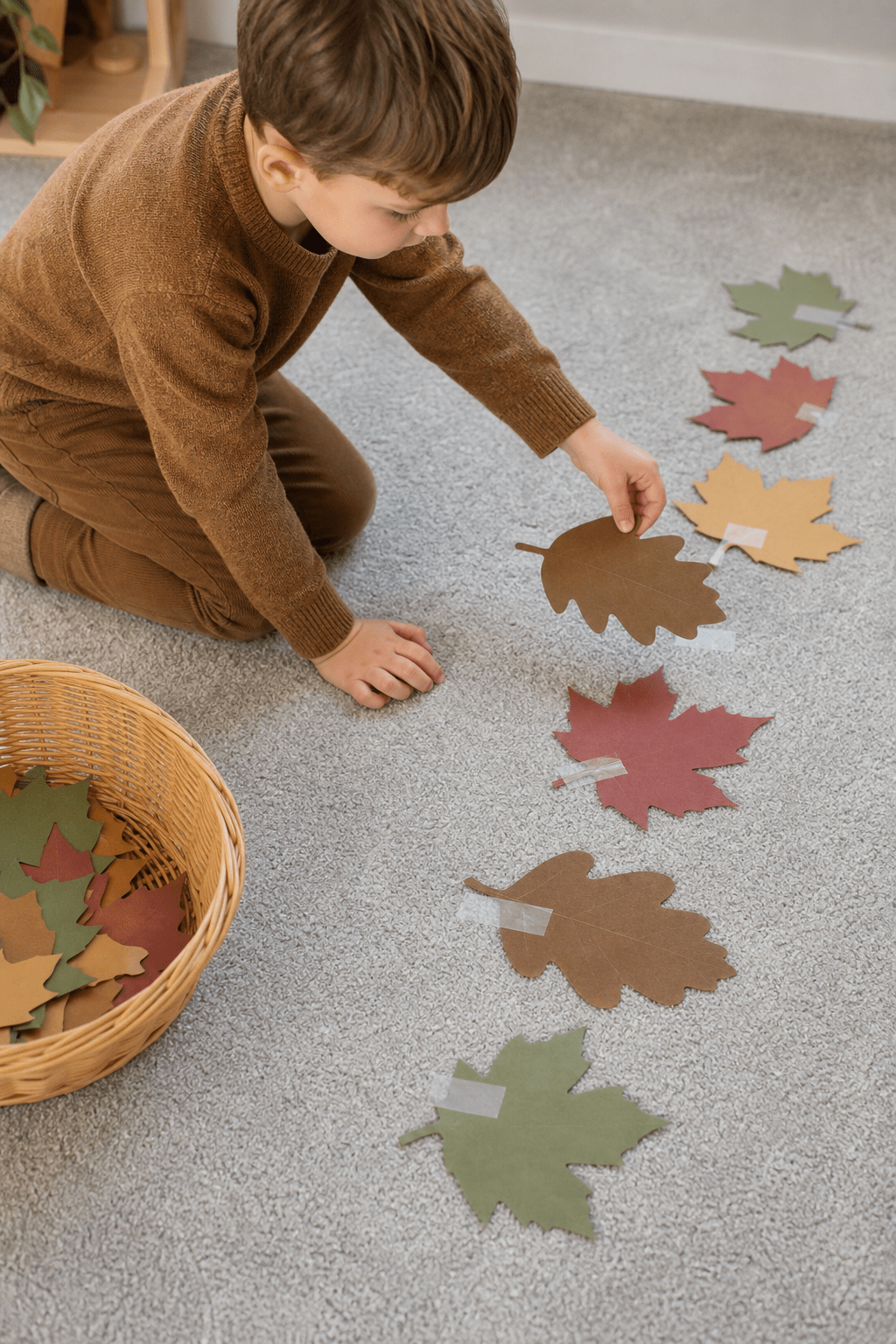
Arrange large sturdy paper leaves in a repeating color pattern on a clear low-pile carpet and secure each one flat with short painter tape loops. Your preschooler walks beside the path, names the pattern, finds the missing leaf, and repairs it before stepping carefully along the side of the row. They collect the pieces into a folder when the pattern is complete.
Why it works: The path combines pattern reasoning with controlled movement, and repairing one missing piece creates a clear problem to solve. The folder gives the activity a defined ending.
Keep paper flat and non-slip, use only a dry clear carpet, remove loose tape, and keep the path away from stairs, pets, glass, breakables, and furniture edges.
Age range tweak:
- Age 3: Use a simple red-yellow pattern with four leaves and walk beside it.
- Age 4: Use six leaves, remove one, and let them repair the pattern.
- Age 5: Let them design the pattern, create a missing spot for you, explain the rule, and collect the pieces.
8. Pumpkin Stem Observation Sketch
Place one firm pumpkin on a towel at a low table and invite your preschooler to look closely at the stem, lines, spots, and shape. They draw one detail at a time with chunky crayons, turn the pumpkin with two hands, and add a short label or symbol. The page and pumpkin return to their storage spots when the observation is finished.
Why it works: The activity slows the child down to notice a real object and gives drawing a specific purpose. Turning the pumpkin reveals new details without adding materials.
Use a firm pumpkin with a secure stem, keep it on a low stable surface, and help with turning if it is heavy.
Age range tweak:
- Age 3: Draw one line or shape while you steady the pumpkin.
- Age 4: Turn the pumpkin and sketch three visible details.
- Age 5: Add labels, compare sides, explain observations, and reset the table.
9. Apple Basket Story Shop

Place three firm apples or rolled sock apples in a basket beside a large stuffed bear and large paper order cards. Your preschooler chooses an order, sells the apples, makes a crayon mark on the card, and restocks the basket. New cards can ask for one red apple, two pretend pie apples, or an apple for a rainy-day picnic.
Why it works: The same few apples support counting, storytelling, early marks, selling, and restocking. The pretend customer gives every round a reason.
Use a large stuffed animal and supervise real apples as food items, returning them to storage after play.
Age range tweak:
- Age 3: Use two soft sock apples and one picture order.
- Age 4: Use three apples and complete several simple orders.
- Age 5: Create order cards, add prices or tally marks, run the shop, and check inventory.
The Bottom Line
Leaves, pumpkins, and apples can support much more than one fall craft. They can become objects to observe, measure, sort, print, pattern, sell, compare, and build stories around.
Choose firm, intact materials and keep the loose set small. The activity stays easier to manage when each object has a clear job and a clear place to return.
One real leaf, one pumpkin, or a few apples can carry an entire preschool activity when the child has something meaningful to notice or do with it.

Want to have these ideas in one place, customized for your kid in just a click? Grab our free Screen-Free Activity Finder.
One mom told us: "My kid was about to have a full meltdown and I had nothing. Pulled up the Screen Free Activity Generator and it gave me 'Tupperware Tower Challenge.' I dumped every plastic container from my kitchen on the floor and told her to stack them. She went from tears to totally absorbed in about 30 seconds. Spent 25 minutes stacking, crashing, matching lids. I just sat there drinking my coffee. Sometimes the simplest stuff works the best."
The Screen-Free Activity Finder is free. Put your email in below and we'll send it over.