
9 Fall Preschool Activities While Family Is Visiting
Family visits can be exciting for a preschooler and exhausting for everyone else. The house sounds different, routines shift, adults talk for long stretches, and your child may bounce between showing off, clinging to you, interrupting, and asking when the guests are leaving. Even a child who loves the visitors can run out of social energy fast.
A useful activity during a visit should help your preschooler feel included without making them responsible for entertaining the room. Small host jobs, welcome signs, place cards, photo projects, and pretend guest care give them a real role they can understand. The best ones also have a place to pause when the noise becomes too much.
These fall activities use hats, cloth squares, pumpkins, apples, blankets, photos, and large paper cards. They are simple enough to prepare around a busy house, but purposeful enough that your child can contribute, reconnect, or step away for a quieter job. Guests get to see them doing something real, and you are not inventing a new distraction every ten minutes.
Give them one real host job at a time
Choose a job your child can finish without crossing the main food, luggage, or doorway traffic. A basket, table corner, or quiet chair can become their station for the visit.
Tell guests what the child is responsible for, then let the role do some of the talking. Preschoolers often handle attention better when they know exactly how they can help.
1. Guest Coat Tag Helper

Cut large leaf-shaped tags from sturdy paper and write each guest's first name in bold letters. At a low table near the entryway, your preschooler matches one tag to each soft hat, folded sweater, or coat placed safely on a bench. They carry the tag, say the name, and set it beside the item rather than attaching anything to clothing. At the end of the visit, they return each tag to a folder.
Why it works: The job helps your child learn who belongs to each item and gives them a useful welcome role without handling keys, bags, or fragile belongings. Filing the tags closes the station cleanly.
Keep the station away from the doorway path and let adults handle heavy coats, purses, keys, and luggage.
Age range tweak:
- Age 3: Use two guests and picture marks beside the names.
- Age 4: Let them match several large tags to safe clothing items.
- Age 5: Let them help write the names, check the group, and organize the tags for the next visit.
2. Fall Welcome Basket Builder
Set a small basket on a low table with folded cloth squares, paper leaf bookmarks, and two large fall picture cards. Your preschooler chooses one cloth, one bookmark, and one card for each guest, places the set in the basket, and carries it to a nearby welcome chair. After the guest chooses an item, your child restocks the basket for the next person.
Why it works: Choosing, arranging, delivering, and restocking creates a repeating host job from simple safe materials. The child can participate without having to perform or make conversation on command.
Age range tweak:
- Age 3: Build one welcome set with two large items.
- Age 4: Prepare and deliver two or three guest sets.
- Age 5: Let them plan the basket, count what is needed, explain the choices, and pack leftovers afterward.
When You Need More Screen-Free Ideas

We made a free Screen-Free Activity Finder for exactly this. Pick your child's age, how much time you have, how much energy they have, and how much help you can give. It'll send you screen-free activity ideas that use normal home materials.
Drop your email and we'll send it over. Unsubscribe anytime.
3. Pumpkin Name Place Cards
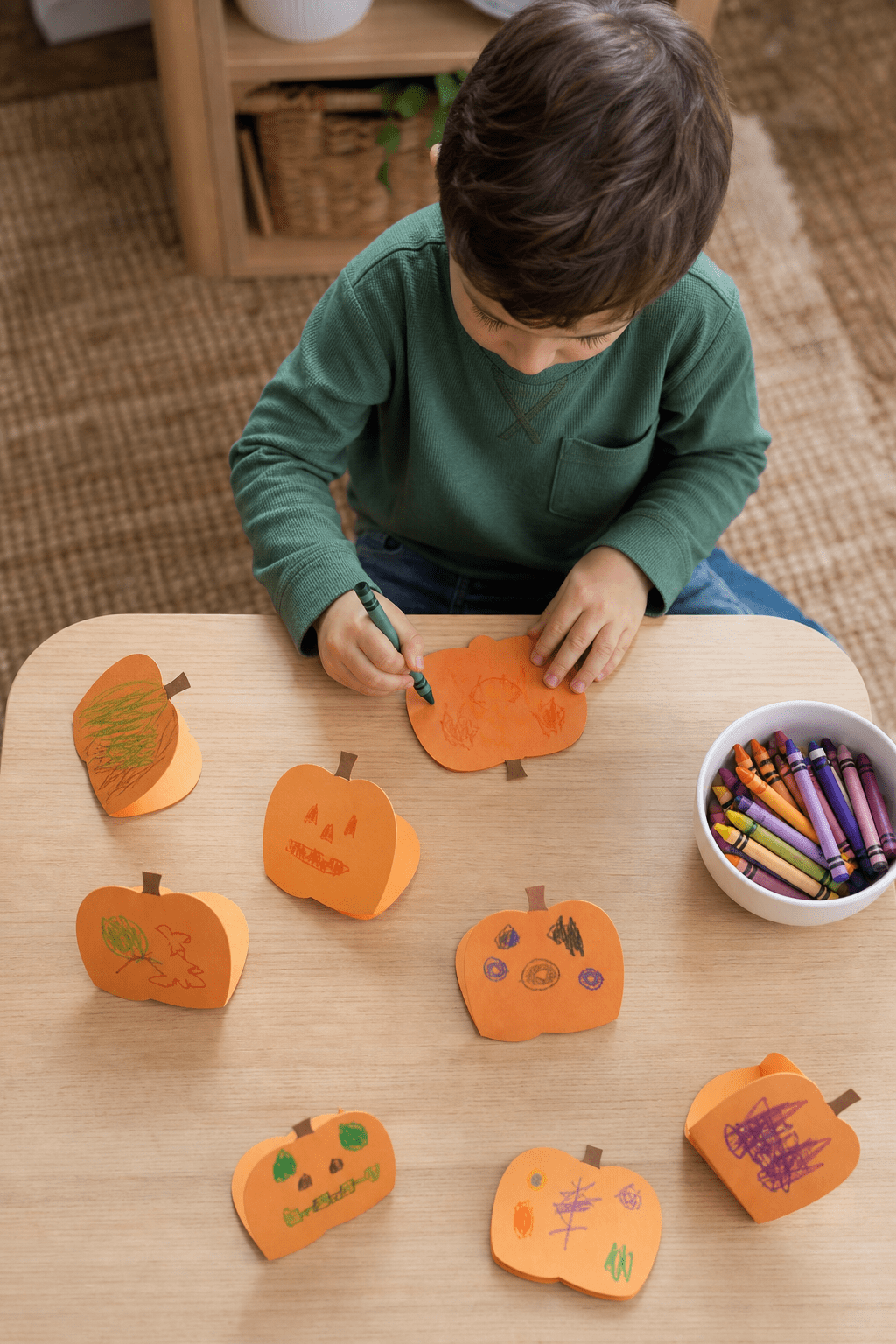
Fold large index cards in half and draw a pumpkin outline on the front of each. Your preschooler copies or traces a guest's first initial, adds a face or leaf, and carries the card to a safe place at the dining table before food is served. When the visit ends, the cards go into a family folder or are recycled together.
Why it works: The place cards turn early writing into a real contribution and help the child connect names with people. One card is a complete project, so the activity can pause between guests.
Set cards before hot food, glassware, knives, or serving dishes are placed on the table.
Age range tweak:
- Age 3: Decorate two cards while an adult writes the names.
- Age 4: Copy first initials and deliver each card to a clear place.
- Age 5: Write short names with a model nearby, check the table, and collect the cards afterward.
4. Apple Snack Napkin Station
Away from the kitchen work area, place folded napkins, nonbreakable plates, and large paper apple labels on a low side table. Your preschooler makes one snack set for each guest by placing a napkin under a plate and an apple label beside it. An adult adds any food later. Your child counts the finished sets and returns extras to the basket.
Why it works: The child gets a real hospitality role without touching food, hot dishes, or breakables. Repeating the same small set keeps the job clear even when the room is busy.
Keep the station away from heat, knives, appliances, glass, hot food, and the main cooking or serving path.
Age range tweak:
- Age 3: Make two plate-and-napkin sets together.
- Age 4: Prepare one set per guest and count them.
- Age 5: Plan the quantity, create labels, check the table, and return extras.
5. Family Photo Leaf Frame
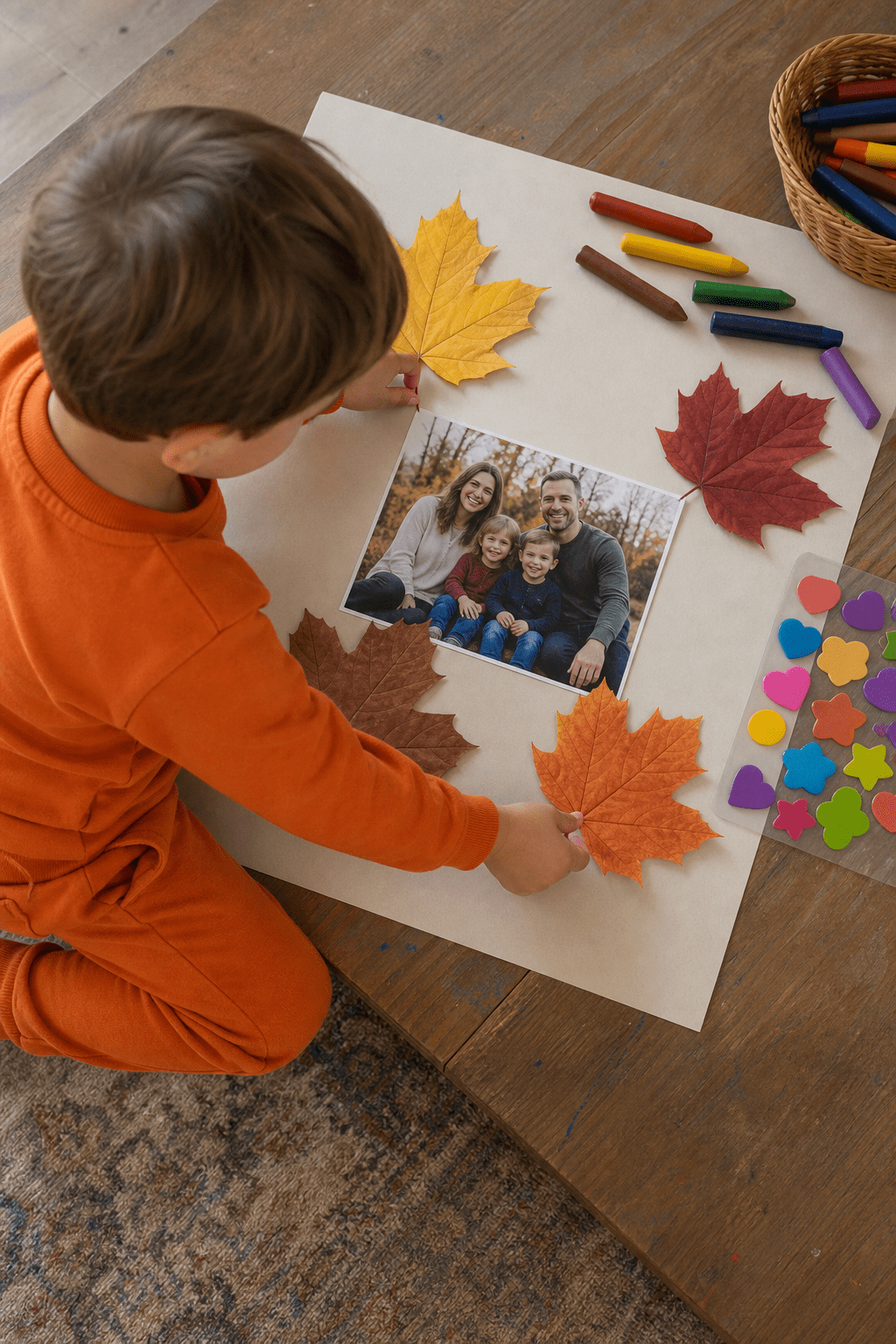
Place one printed family photo on a large sheet of paper and set out chunky crayons, jumbo stickers, and four large adult-cut paper leaves. Your preschooler arranges the leaves around the photo, adds a crayon border, and names the people they see. The leaves can be moved before an adult secures the finished frame, or everything can return to a folder for another visit.
Why it works: The photo gives the child a familiar focus when the actual room feels socially busy. Arranging and naming family members can lead to conversation without putting the child in the center of attention.
Supervise stickers, keep backing paper on the table, and remove any torn paper immediately.
Age range tweak:
- Age 3: Use two large leaves and name one or two people together.
- Age 4: Arrange a full border and add simple marks or stickers.
- Age 5: Plan the layout, add short name labels, explain the picture, and file the materials.
6. Stuffed Bear Guest Guide
Give a large stuffed bear a large paper map with three picture stops: bathroom, quiet chair, and coat bench. Your preschooler walks the bear through the route, explains one house rule at each stop, then returns the bear to a basket. Later, a guest can ask the bear for help and your child can repeat only the part they want.
Why it works: The bear lets the child practice being helpful without needing to lead an adult directly. The three-stop map keeps the pretend role short and predictable.
Use a large stuffed animal with no loose parts and keep the walking route clear of stairs, luggage, pets, glass, and breakables.
Age range tweak:
- Age 3: Use two picture stops and walk the bear together.
- Age 4: Let them guide the bear through all three stops.
- Age 5: Let them draw a new stop, explain simple rules, and fold the map afterward.
7. Harvest Conversation Basket
Put six large picture cards in a basket, showing easy fall topics such as favorite pie, windy weather, pumpkins, family pets, cozy clothes, and something funny. Your preschooler chooses one card, asks a guest the picture question, listens, and places the card in a finished pile. They can stop after one card or invite someone else to choose the next.
Why it works: The picture gives the child something concrete to say and reduces the pressure of open-ended social conversation. Moving each card creates a visible finish.
Age range tweak:
- Age 3: Use two cards and ask the question together.
- Age 4: Let them choose and ask three or four picture questions.
- Age 5: Let them draw a new card, lead a short round, and sort the finished cards back into the basket.
8. Cozy Blanket Seat Setup
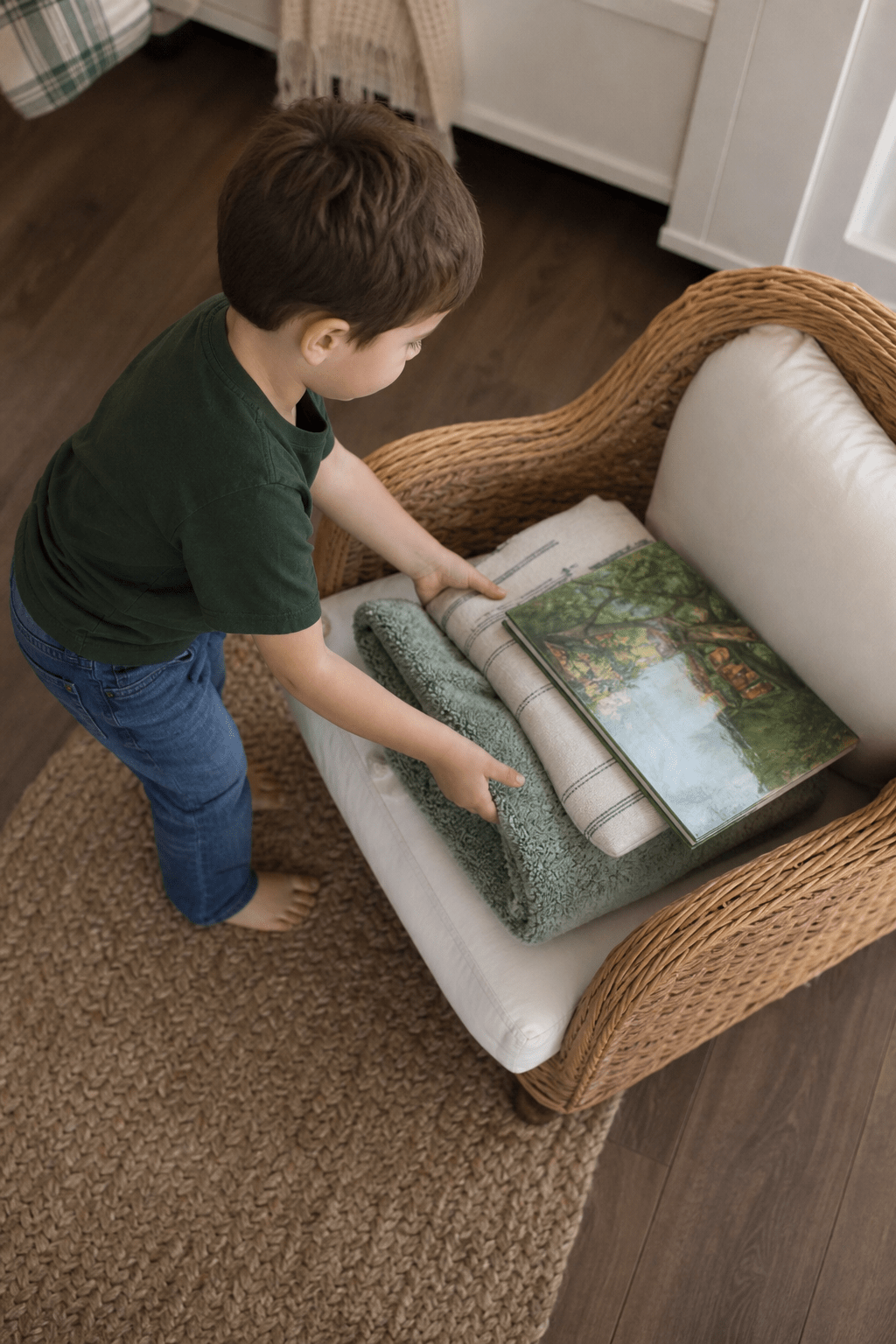
Choose one safe guest chair away from lamps, heaters, windows, cords, and the kitchen. Your preschooler carries a folded small blanket and firm pillow to the chair, smooths the blanket across the seat, places the pillow, and adds one large book. After the guest leaves the chair, the child returns each item to its basket.
Why it works: The setup gives the child a visible way to care for someone and includes a complete reset. It can also create a quieter place for the child to sit beside the guest later.
Keep the chair away from lamps, heaters, cords, windows, stairs, and kitchen traffic, and keep exits open.
Age range tweak:
- Age 3: Carry one lightweight item at a time and place it with help.
- Age 4: Set up the full chair and return the items afterward.
- Age 5: Choose the safe chair, inspect the area, arrange the items, and manage the reset.
9. Goodbye Leaf Note Delivery
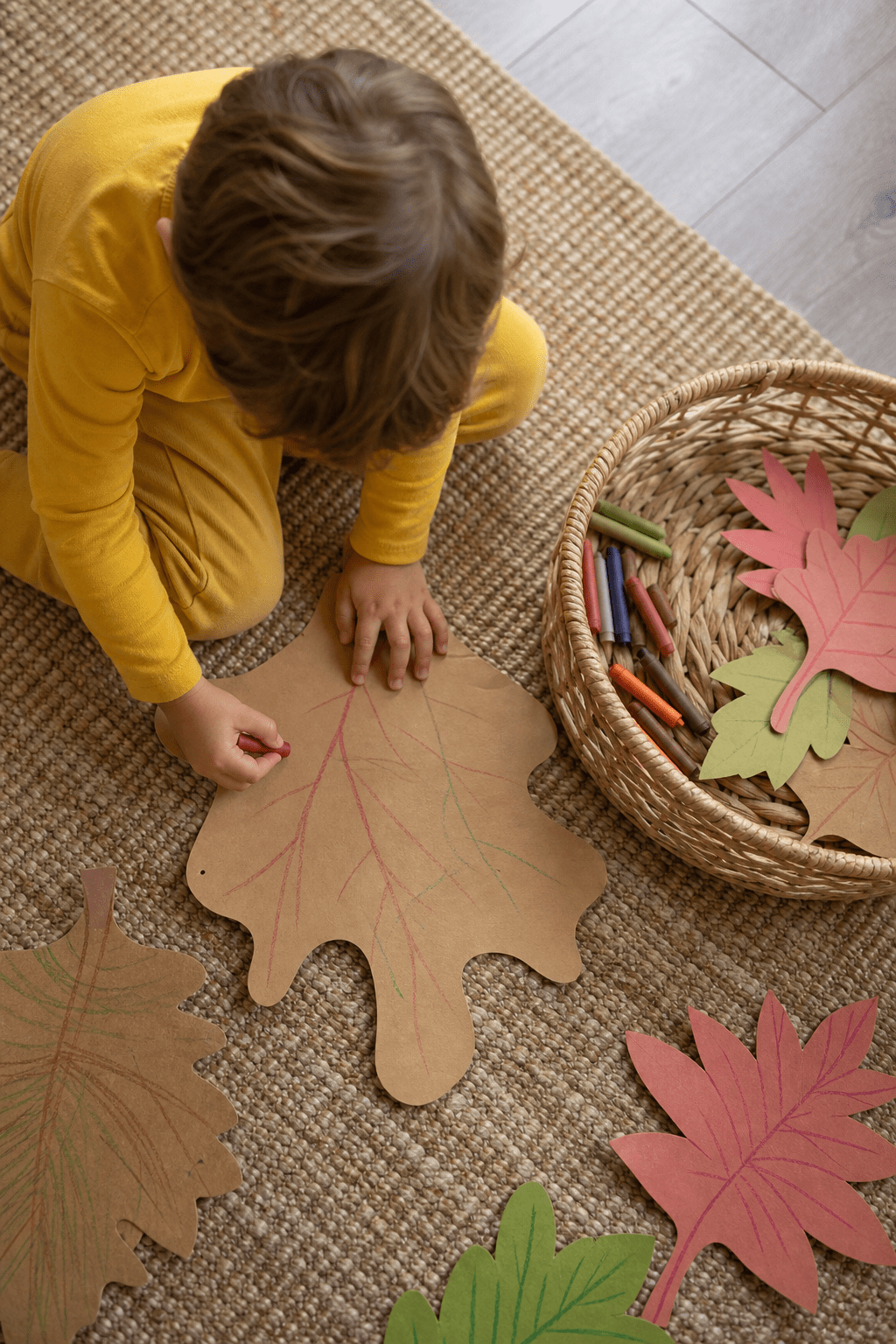
Give your preschooler large paper leaves and chunky crayons near the end of the visit. They make one mark, picture, or short message for each guest, place the notes in a shallow basket, and deliver them at the door while an adult handles coats and bags. Any unfinished notes stay in the basket for a later mail delivery.
Why it works: The notes give the visit a clear closing ritual and let the child say goodbye without being forced into hugs or a long performance. Each delivery marks one completed transition.
Keep paper pieces large and intact, and let adults manage the doorway, luggage, and exterior traffic.
Age range tweak:
- Age 3: Decorate one large leaf note and deliver it with you.
- Age 4: Make several picture notes and choose who receives each one.
- Age 5: Write short messages, check the guest list, deliver the notes, and store extras.
The Bottom Line
Family visits usually go better when your preschooler has a role that is useful but not overwhelming. A welcome basket, place card, guest guide, cozy chair, conversation card, or goodbye note gives them a way to join the visit without becoming the entertainment.
Keep the job small and let them step away when they have had enough attention. A quiet station can be just as valuable as a social one.
The best host activity ends cleanly. When the cards return to the basket or the blanket goes back to storage, your child can see that their part of the visit is complete.

Want to have these ideas in one place, customized for your kid in just a click? Grab our free Screen-Free Activity Finder.
One mom told us: "My kid was about to have a full meltdown and I had nothing. Pulled up the Screen Free Activity Generator and it gave me 'Tupperware Tower Challenge.' I dumped every plastic container from my kitchen on the floor and told her to stack them. She went from tears to totally absorbed in about 30 seconds. Spent 25 minutes stacking, crashing, matching lids. I just sat there drinking my coffee. Sometimes the simplest stuff works the best."
The Screen-Free Activity Finder is free. Put your email in below and we'll send it over.