
9 Thanksgiving Activities for Preschoolers
Preschoolers can understand more of Thanksgiving than toddlers, but they still learn the holiday best through something they can do. A turkey tail can become a pattern. A table setting can become a matching job. A pumpkin line can turn into a size challenge. Family photos, broad paper shapes, delivery routes, color hunts, and simple host jobs can all make the day feel meaningful without turning it into a formal lesson.
The strongest activities for ages 3 to 5 usually have a visible goal and a second stage. Build it, change it, sort it, deliver it, check it, or reset it. That extra step helps the activity last beyond the first obvious move while still keeping the materials familiar.
These Thanksgiving activities use normal home supplies and large child-safe pieces. Adult cutting happens before the activity when needed. Avoid dried corn, beans, nuts, toothpicks, tiny craft feathers, buttons, magnets, candles, glass, and small decorations. Keep food, hot dishes, sharp tools, and kitchen traffic separate from play. The goal is practical seasonal play that a preschooler can actually enter and finish.
Give the activity a visible goal and a second round
Preschoolers stay longer when there is an obvious thing to complete and one small way to change it afterward. Build the turkey, reset the pattern. Line up the pumpkins, then reorder them. Set the table, then check it.
1. Turkey Tail Pattern Builder
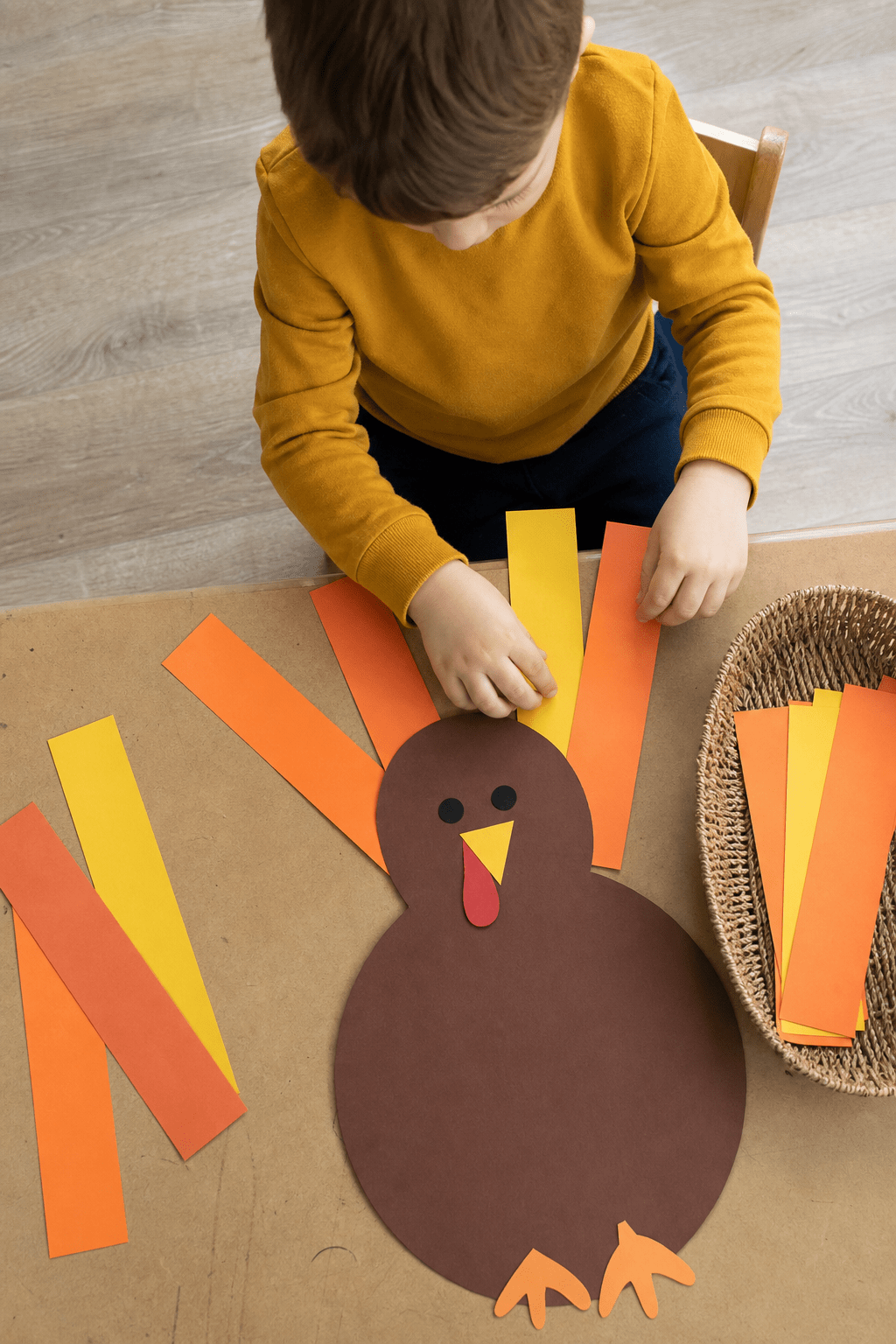
Adult-cut one large paper turkey body and eight broad paper strips in two or three fall colors. Put the turkey on a low table with the strips in a shallow basket and seat your preschooler on a chair. They arrange the strips behind the body in a simple repeating pattern, remove them, and try a different pattern. Nothing has to be glued, so mistakes are easy to fix. Keep every strip broad and skip tiny feathers or decorative pieces. When the pattern is done, your child can stack the strips by color and return them to the basket.
Why it works: The loose turkey tail turns patterning into a visible Thanksgiving build that can be changed instead of completed once and discarded.
Age range tweak:
- Age 3: Use two colors and copy a simple alternating pattern together.
- Age 4: Build a two- or three-color repeating pattern and reset it.
- Age 5: Invent a pattern rule, explain it, rebuild the tail a second way, and sort the strips afterward.
2. Thanksgiving Table Setting Practice
At a low table away from actual meal service, set out two empty plastic plates, two empty plastic cups, and two cloth napkins. Seat your preschooler on a child-size chair. Make one simple place setting as the model and let them build the second one beside it. Then mix all six pieces and ask them to set both places again without the model. Keep everything cool, dry, and unbreakable. No food, glass, knives, or hot serving pieces belong in the activity. When both settings are complete, the child can count the pieces and return them to a basket.
Why it works: The setup turns a real Thanksgiving job into matching, memory, and sequencing without bringing the child into the serving zone.
Age range tweak:
- Age 3: Copy one three-piece setting with you beside them.
- Age 4: Build two settings, mix them, and rebuild.
- Age 5: Plan the two settings from memory, count the pieces, check for missing items, and pack the basket.
When You Need More Screen-Free Ideas

We made a free Screen-Free Activity Finder for exactly this. Pick your child's age, how much time you have, how much energy they have, and how much help you can give. It'll send you screen-free activity ideas that use normal home materials.
Drop your email and we'll send it over. Unsubscribe anytime.
3. Pumpkin Size Line-Up

Gather three firm pumpkins or squash that are clearly different sizes and place them on a folded towel on the floor. Your preschooler moves them into small, medium, and large order, checks the line, then reverses it. Use only sizes the child can safely move with two hands, and let an adult reposition anything heavy. If real pumpkins are not available, use three broad adult-cut paper pumpkin shapes instead. Keep the activity on a flat floor away from stairs and furniture edges so nothing can roll into traffic. After ordering, let the child point to which pumpkin they would move first if the line had to fit on a smaller towel.
Why it works: The visible size difference gives preschoolers a clear ordering challenge with a strong seasonal object and an easy reverse round.
Age range tweak:
- Age 3: Use two lightweight pumpkins or paper shapes and compare bigger and smaller.
- Age 4: Order three clearly different sizes and reverse the line.
- Age 5: Estimate the order before moving, explain the choice, reverse it, and measure with hand spans if interested.
4. Family Meal Picture Story
Give your preschooler four broad scrap-paper squares and chunky crayons at a low table, with the child sitting on a chair. Ask them to draw four simple picture moments from a family meal: people arriving, table getting ready, everyone eating, and cleanup. The drawings can be circles, faces, plates, or any marks they understand. Keep the squares blank with no printed words or numbered boxes. When the pictures are done, mix them and let your child put them into story order. Store the set in a paper envelope for another retelling.
Why it works: Drawing and sequencing turns the holiday into a story the child controls without requiring a worksheet or a perfect picture.
Age range tweak:
- Age 3: Draw two simple before-and-after pictures together.
- Age 4: Make three or four picture squares and put them in an easy order.
- Age 5: Create a four-part story, explain the sequence, mix it, rebuild it, and store the pictures.
5. Harvest Delivery Route
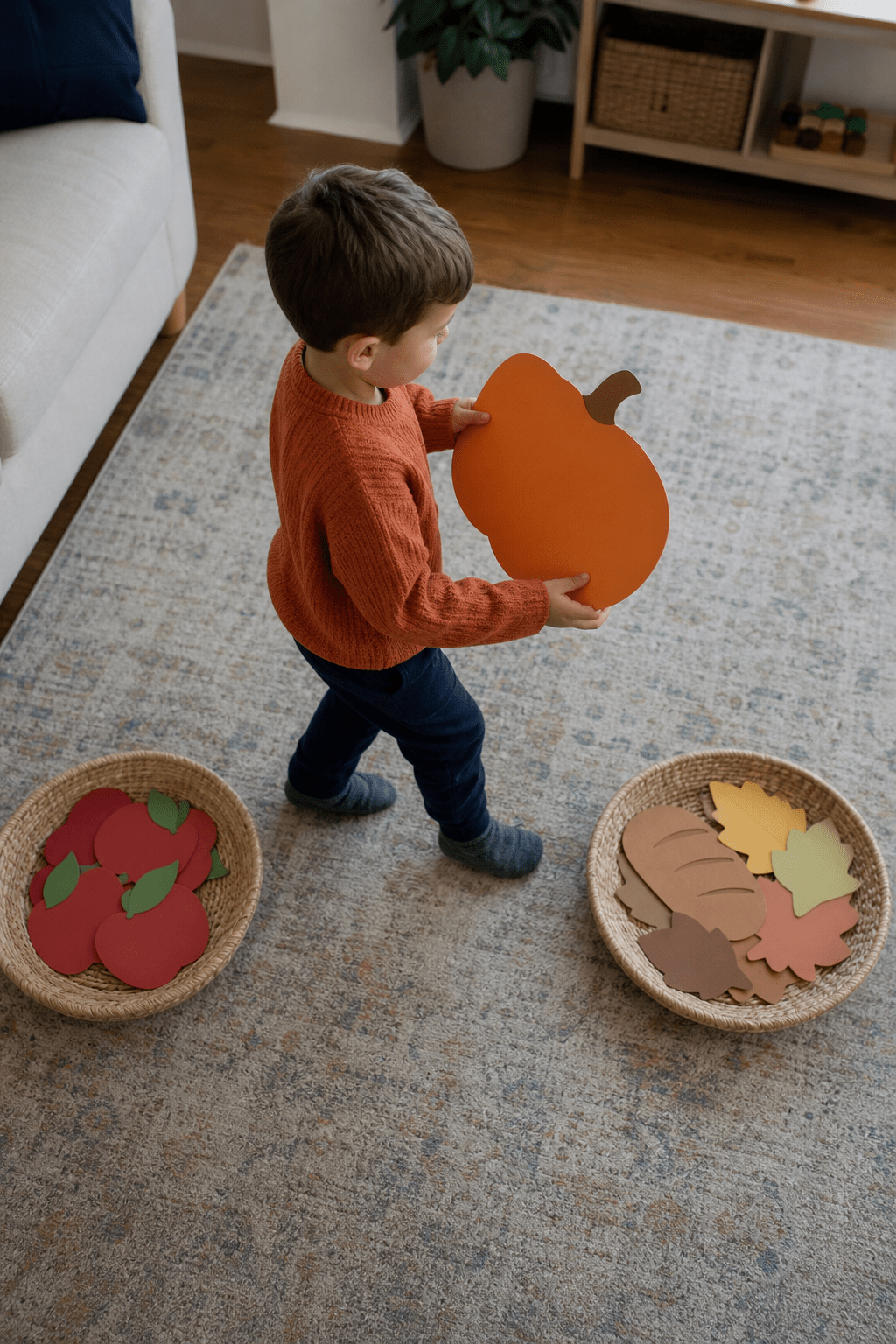
Set two shallow baskets several steps apart on a clear rug and place four broad paper harvest shapes in the first basket. Your preschooler carries one paper pumpkin, apple, leaf, or loaf shape to the second basket, returns, and continues until the first basket is empty. For a second round, reverse the route or sort the shapes by type before delivering. Keep the route away from stairs, glass, pets, cords, and busy doorways. Use only broad picture shapes with no written labels or tiny pieces. The empty first basket shows the child exactly when the job is finished.
Why it works: The delivery route combines movement, sorting, and a visible finish, which helps a simple Thanksgiving setup last beyond one trip.
Age range tweak:
- Age 3: Use two broad shapes and keep the baskets close together.
- Age 4: Deliver four shapes one at a time and reverse the route.
- Age 5: Choose a sorting rule before delivery, count trips, reverse the route, and reset both baskets.
6. Thankful Drawing Basket
Put several sheets of blank paper and chunky crayons in one shallow basket at a low table, with your preschooler sitting on a chair. Ask them to draw one person, place, food, toy, pet, or moment they are glad is part of their life. Keep the wording casual and accept any answer, including something silly. The child can make one drawing, put it in a finished folder, and stop, or make a second one. Do not require writing, labels, or a formal gratitude sentence. The basket and folder keep the activity from spreading across the table.
Why it works: The prompt gives preschoolers a concrete way to connect Thanksgiving with something they care about without turning gratitude into a performance.
Age range tweak:
- Age 3: Draw one favorite thing with them and talk about the picture.
- Age 4: Make one or two pictures and place each in the finished folder.
- Age 5: Choose several different things, explain each picture, arrange the drawings, and save or recycle them.
7. Thanksgiving Color Hunt

Choose two fall colors, such as orange and brown, and give your preschooler one small basket. Search one room for a few large safe objects in those colors, such as a towel, board book, plastic cup, pillow, or stuffed animal. Bring each item to the rug, group by color, then return everything to its real home. Keep the search area small and approve every object before it goes into the basket. Do not use glass, tiny toys, batteries, food, breakables, cords, or items from shelves the child has to climb to reach.
Why it works: The hunt turns the existing room into a seasonal search game, and returning each object creates a useful second phase.
Age range tweak:
- Age 3: Search for two large objects in one color together.
- Age 4: Use two colors and sort a small group on the rug.
- Age 5: Choose the colors, predict what might be found, sort the group, count it, and return every object.
8. Guest Welcome Placemat Maker
Give your preschooler one large sheet of sturdy paper or a flattened paper grocery bag at a low table, with the child sitting on a chair. They decorate the surface with broad crayon marks, large adult-cut paper leaves, and a few jumbo stickers to make a placemat for a guest. Use short painter's tape pieces to hold the large leaves if you do not want glue. No name needs to be written. When the placemat is done, keep it away from food until all loose pieces are checked and secured, or use it as a decorative paper under an empty practice plate instead.
Why it works: The craft gives the child a real hosting purpose and a finished object without needing readable names or small decorations.
Age range tweak:
- Age 3: Decorate one large paper surface with crayons and two broad leaves.
- Age 4: Plan a simple border and add several broad shapes or jumbo stickers.
- Age 5: Create a fuller design, check that every piece is secure, and choose where the empty practice setting will sit.
9. Pumpkin Roll-and-Measure
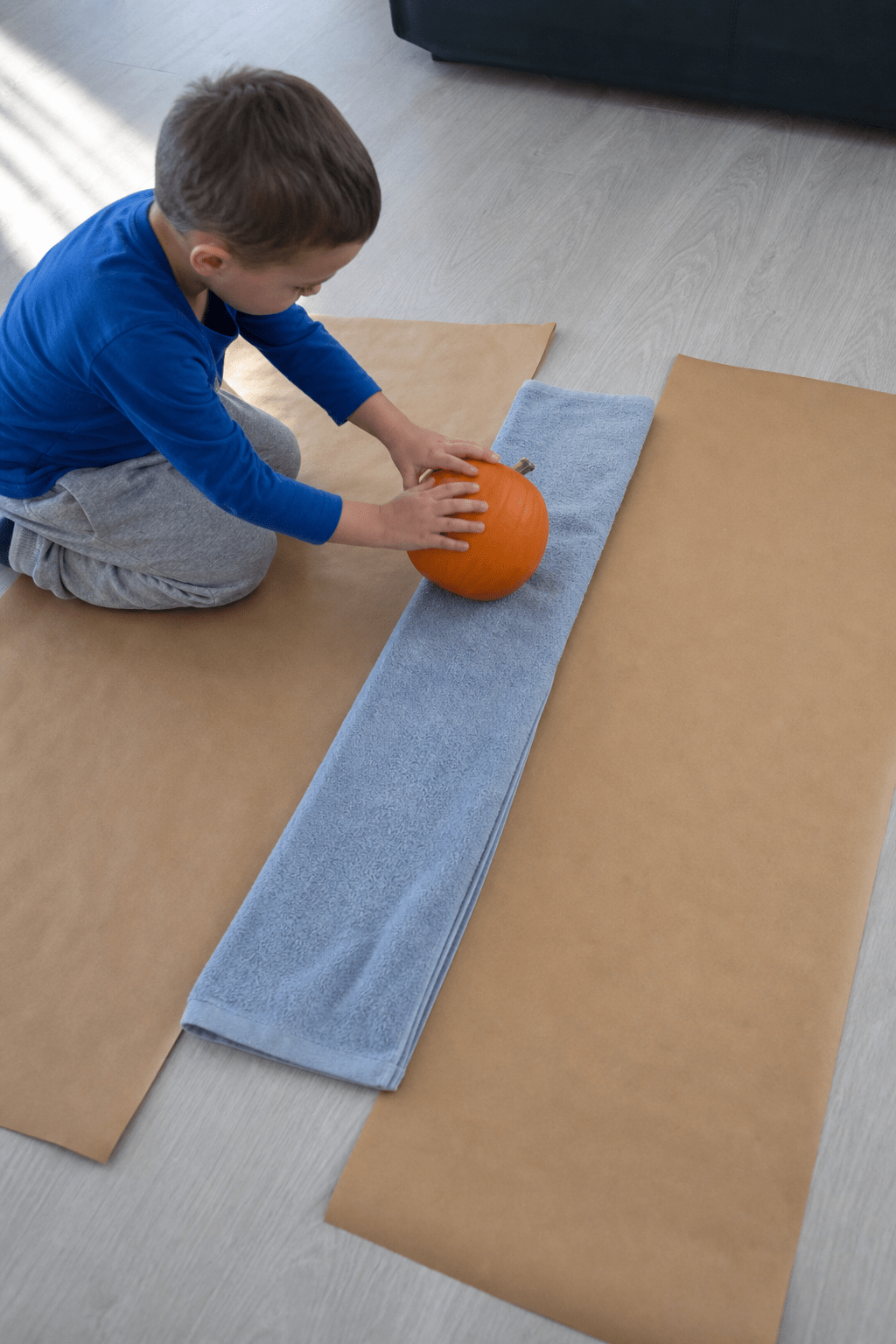
Place one firm lightweight pumpkin on a broad folded towel on a clear floor. Mark a start and stop spot with two large paper patches, then let your preschooler roll the pumpkin gently from one patch to the other. After each roll, count how many hand spans fit between the patches or move the finish patch closer and farther. An adult stabilizes the pumpkin between turns. Keep the route short, flat, and away from feet, stairs, furniture edges, and breakables. Stop if the child starts throwing or kicking the pumpkin.
Why it works: The roll gives preschoolers movement and a visible distance challenge, while moving the finish patch creates an easy second round.
Age range tweak:
- Age 3: Use a very short roll between two close paper patches with you beside them.
- Age 4: Roll gently, move the finish patch, and compare near and far.
- Age 5: Predict which route is longer, roll, measure with hand spans, change the finish point, and reset the towel.
The Bottom Line
Preschoolers can handle a little more planning and a little more story, but Thanksgiving activities still work best when the job is visible. Build, match, order, deliver, draw, search, or reset.
Keep the holiday theme concrete and let the activity create a second round. A turkey tail can be rebuilt. A place setting can be mixed and checked. A color hunt ends by returning everything to its home.
That extra step is usually more useful than adding more supplies.

Want to have these ideas in one place, customized for your kid in just a click? Grab our free Screen-Free Activity Finder.
One mom told us: "My kid was about to have a full meltdown and I had nothing. Pulled up the Screen Free Activity Generator and it gave me 'Tupperware Tower Challenge.' I dumped every plastic container from my kitchen on the floor and told her to stack them. She went from tears to totally absorbed in about 30 seconds. Spent 25 minutes stacking, crashing, matching lids. I just sat there drinking my coffee. Sometimes the simplest stuff works the best."
The Screen-Free Activity Finder is free. Put your email in below and we'll send it over.