
7 Thanksgiving Activities for Toddlers Who Get Overwhelmed Easily
Thanksgiving can be a lot for a toddler who gets overwhelmed easily. More voices, different food smells, decorations, visitors, music, and a changed routine can pile up before anyone even sits down to eat. A big themed activity with several colors and materials may add to the problem instead of helping.
For these toddlers, the useful version is usually smaller and more predictable. One color. One basket. One soft object. One book. One place to put the finished item. The Thanksgiving theme can still be there, but it should not require a loud reveal, a messy sensory bin, or a pile of choices.
These activities are designed to stay quiet and contained. They avoid tiny loose pieces, food-based sensory materials, flashing lights, loud music, and complicated pretend rules. Stay close, lower the number of choices if your child starts looking unsure, and let them stop without finishing. A calm five-minute reset can be more useful than stretching a seasonal activity until it becomes another thing they have to escape from.
Shrink the choices before you add the theme
Overwhelmed toddlers often do better when the activity has one visible starting point and one obvious finish. Keep extra materials out of sight and add only one new step after the first one feels comfortable.
1. One-Color Turkey Board

Place one large paper turkey body on a cardboard panel and choose only one color of broad paper strips, such as orange. Put three strips in a shallow basket. Your toddler places one strip behind the turkey, presses it flat, and reaches for the next. Nothing needs to be glued, and there are no multiple color choices to manage. When the three strips are placed, either stop or gather them and rebuild once. Keep the paper pieces broad and remove any torn scraps immediately. The simplicity is intentional, not a missing part of the craft.
Why it works: One color and one repeated motion keep the Thanksgiving theme visible without loading the child with choices.
Age range tweak:
- 12-18 months: Use one broad strip and place it together.
- 18-24 months: Use two or three same-color strips and let them place each one.
- 2-3 years: Let them build the simple tail, rebuild once, and return all pieces to the basket.
2. Two-Leaf Quiet Match
Place two broad paper leaves on a small towel, one orange and one brown, and put two matching broad paper patches beside them. Your toddler places each leaf beside the matching patch, then you quietly mix the two and repeat. Keep the setup to those four pieces rather than adding a full rainbow or a pile of real leaves. If matching feels like too much, simply place one leaf on one patch together and stop. The towel gives the activity a clear boundary, and all pieces return to a single envelope or basket at the end.
Why it works: Two visible choices give the child enough structure to engage without turning color matching into a busy sorting task.
Age range tweak:
- 12-18 months: Use one leaf and one matching patch.
- 18-24 months: Use two simple matches and model the first one.
- 2-3 years: Let them mix and rematch the two pairs, then pack the broad pieces away.
When You Need More Screen-Free Ideas

We made a free Screen-Free Activity Finder for exactly this. Pick your child's age, how much time you have, how much energy they have, and how much help you can give. It'll send you screen-free activity ideas that use normal home materials.
Drop your email and we'll send it over. Unsubscribe anytime.
3. Quiet Pumpkin Brush
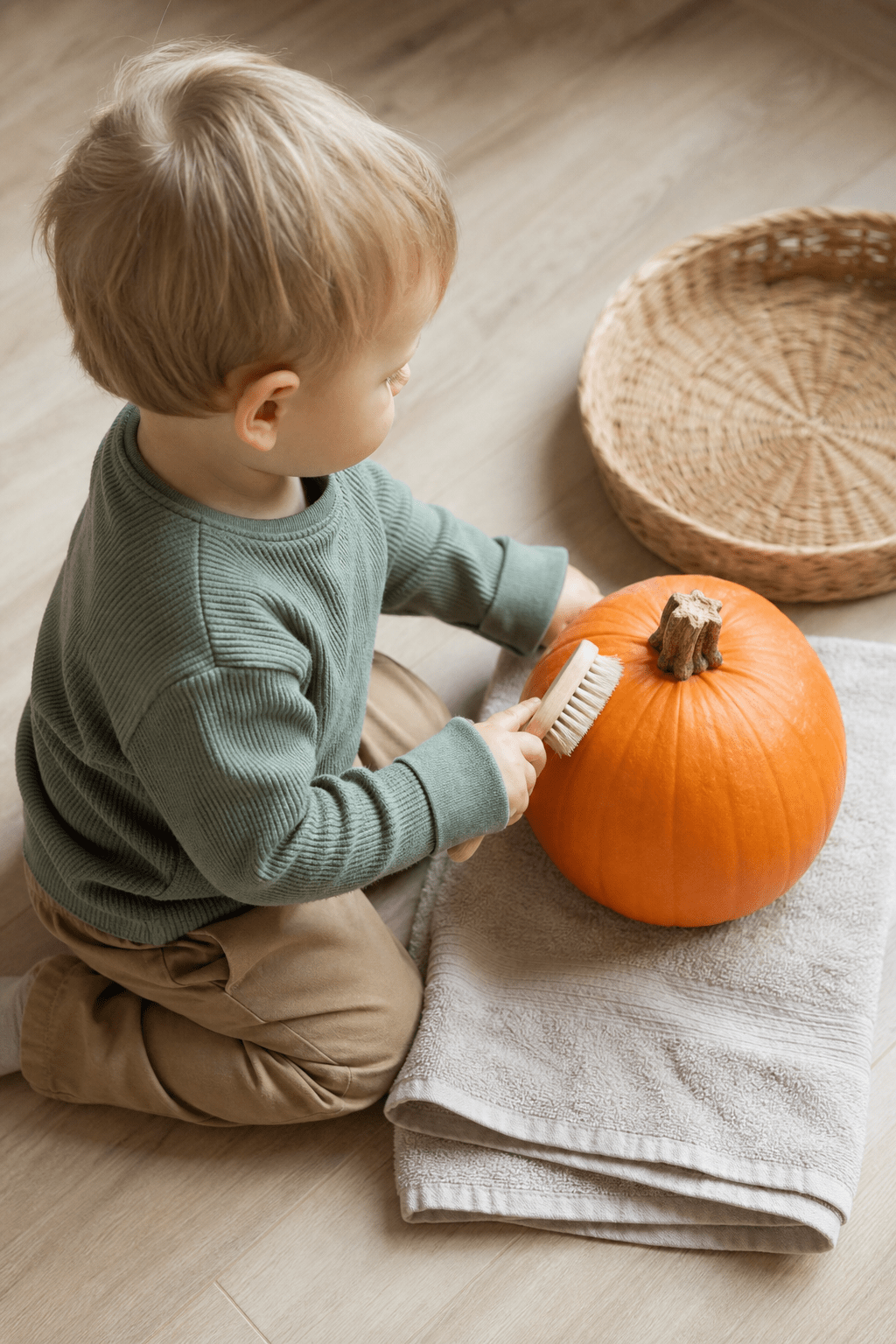
Set one firm small-to-medium pumpkin on a folded towel and give your toddler one clean dry soft brush, such as a pastry brush that is not being used for food. They brush one side slowly, pause, turn the pumpkin with your help, and brush again. No water, glitter, paint, or extra tools are needed. Keep the pumpkin stable so it cannot roll into feet or furniture. If the child becomes absorbed in one section, let them stay there. When they are done, the brush goes into a basket and the pumpkin stays where it is.
Why it works: The slow repetitive brushing gives hands a predictable job and keeps the sensory load low while still feeling seasonal.
Age range tweak:
- 12-18 months: Hold the pumpkin and let them make one or two dry brush strokes.
- 18-24 months: Let them brush one side and help turn the pumpkin.
- 2-3 years: Let them choose which side to brush, count a few strokes, and return the brush to the basket.
4. Stuffed Animal Dinner Seat
Put one large stuffed animal on a floor cushion with one empty plastic cup and one folded cloth napkin. Your toddler places the cup beside the animal, pats the napkin flat, and leaves the animal sitting there. That is the whole first round. If they want more, remove the cup, let them set it again, or switch which side the napkin sits on. Avoid a full pretend feast, piles of toy food, or several stuffed animals at once. Choose a stuffed animal with no loose buttons, ribbons, or small accessories.
Why it works: One animal and two familiar objects create quiet pretend play without the clutter and social pressure of a larger pretend meal.
Age range tweak:
- 12-18 months: Use one large stuffed animal and one empty plastic cup.
- 18-24 months: Add the folded napkin and let them place both items.
- 2-3 years: Let them reset the seat several times, choose the side for each item, and pack the cup and napkin afterward.
5. One-Book Thanksgiving Look
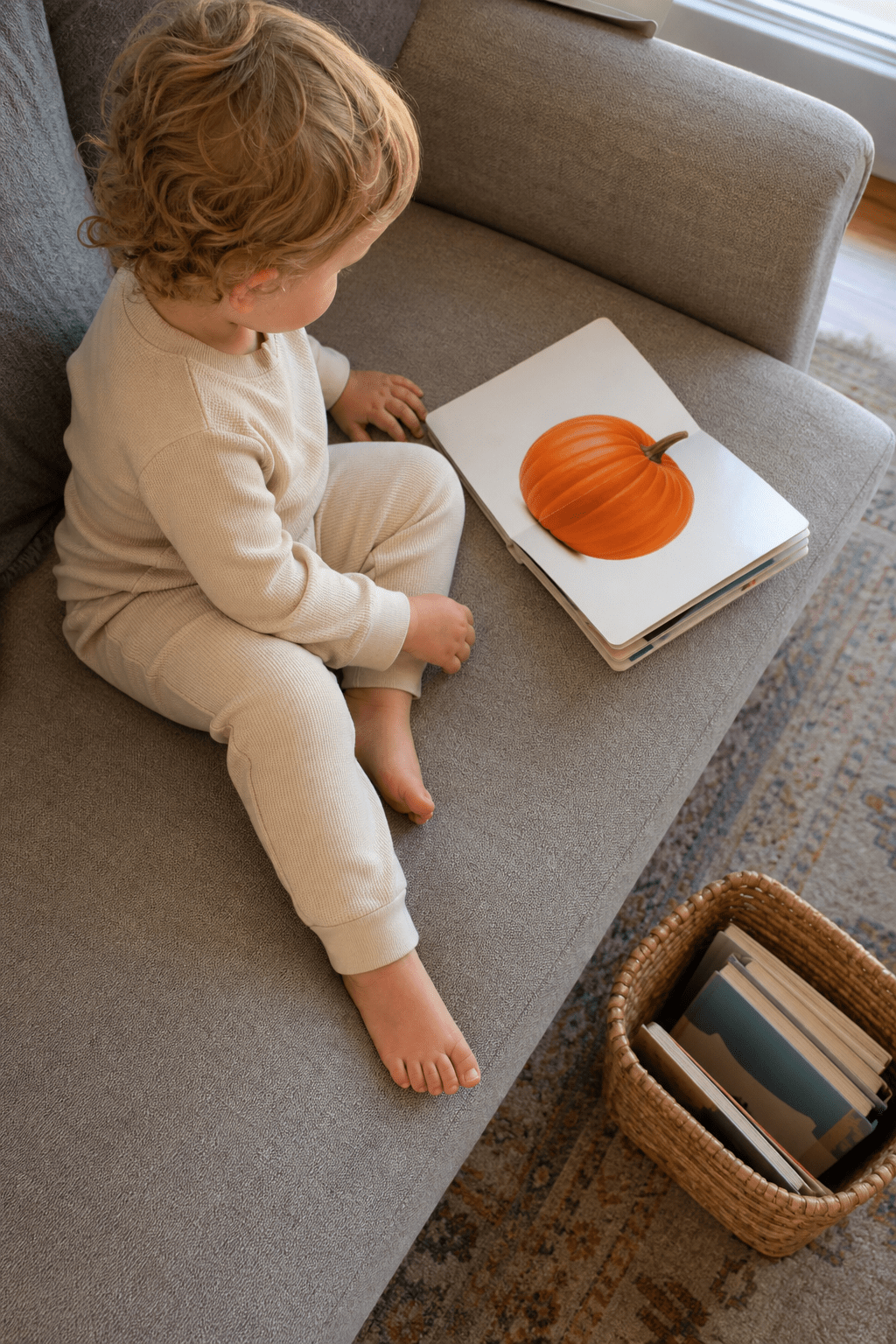
Put one sturdy board book on a quiet rug or couch spot and keep the rest of the books away. Choose a page with a pumpkin, meal, family, leaf, cup, or other familiar picture. Sit beside your toddler and look at that one book without adding a search list or several questions. They can turn pages, point, close it, and open it again. If talking seems to make the moment busier, name one picture and then stay quiet. The book goes back to one basket when they are finished, giving the activity a visible ending.
Why it works: A single book removes decision overload and gives the child a quiet Thanksgiving-adjacent focus they can control.
Age range tweak:
- 12-18 months: Look at one sturdy page together and let them close the book when done.
- 18-24 months: Let them turn a few pages and point to one familiar picture.
- 2-3 years: Let them choose when to stop, find one seasonal-looking picture, and return the book to the basket.
6. Soft Harvest Drop
Place one shallow basket and three large rolled washcloths or socks on a small rug. Your toddler picks up one soft bundle and drops it into the basket. Repeat with the second and third, then stop or quietly dump them back onto the rug for one more round. Use only soft large items with no bands, clips, or loose threads. Keep the basket close enough that the child does not need to cross a noisy room or weave around guests. If three pieces feel like too much, start with one and add another only if they ask.
Why it works: The drop gives immediate feedback, while the tiny number of soft pieces keeps the activity calm and predictable.
Age range tweak:
- 12-18 months: Use one soft bundle and keep the basket within arm's reach.
- 18-24 months: Use two or three bundles and repeat the same drop.
- 2-3 years: Let them choose the order, count the drops, empty the basket once, and stop when they want.
7. Thanksgiving Finish Basket
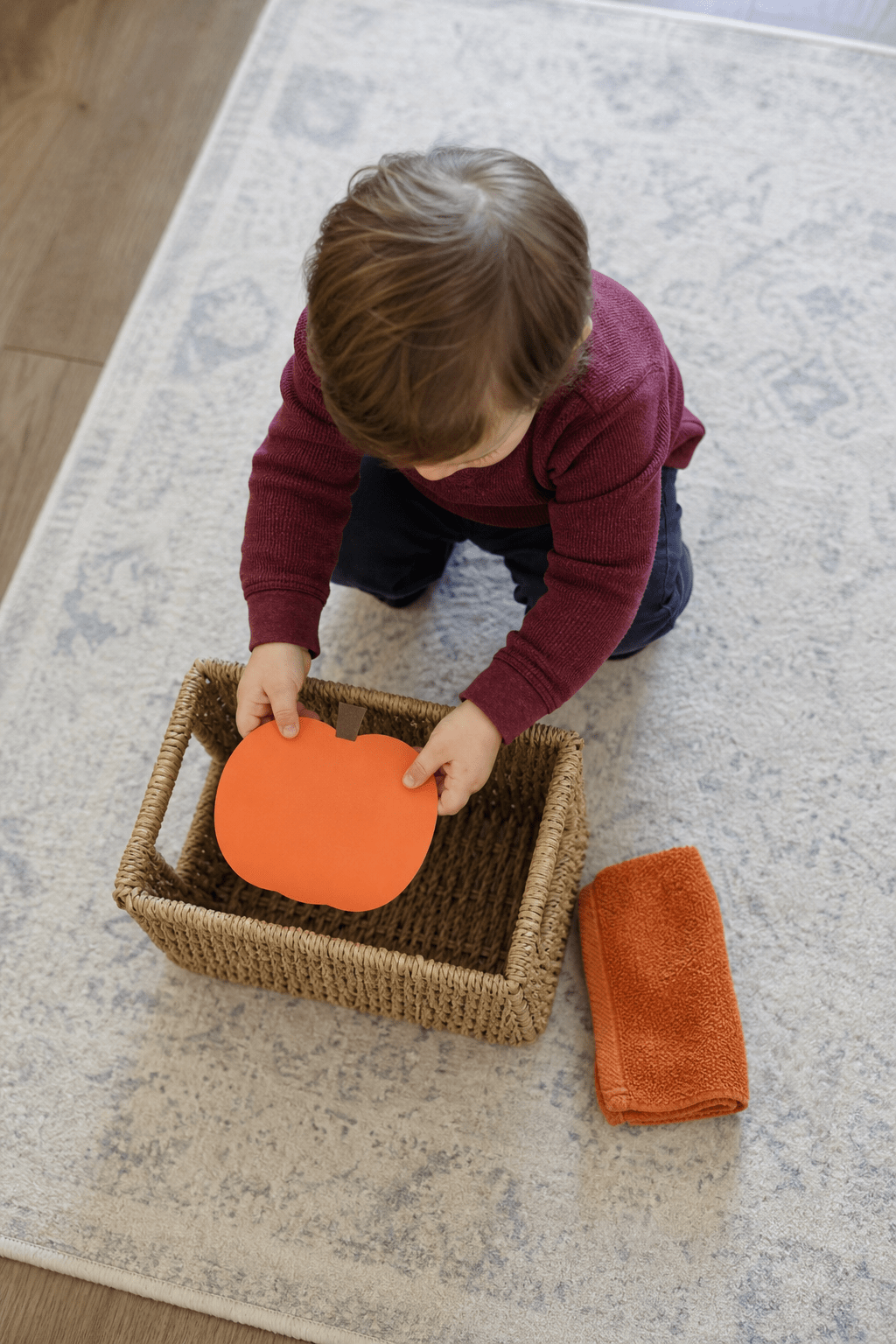
Set one small basket beside two broad Thanksgiving materials, such as a paper pumpkin and a folded orange washcloth. Tell your toddler that when they are finished touching or using an item, it goes in the basket. They can move the pumpkin in, then the washcloth, empty the basket if they want another round, and fill it again. The basket does not require sorting, matching, or a right answer. It simply gives the activity an ending your child can see. Keep the two items large, safe, and familiar, and stay close if paper still goes in the mouth.
Why it works: A visible finish point can lower uncertainty for toddlers who get overloaded when an activity seems to keep expanding.
Age range tweak:
- 12-18 months: Use one large safe item and help place it in the basket when finished.
- 18-24 months: Use two items and let them move each one into the basket.
- 2-3 years: Let them decide when each item is done, empty the basket once if they want, and carry it to the storage spot.
The Bottom Line
A Thanksgiving activity does not have to add more stimulation to an already busy holiday. For some toddlers, the best seasonal play is the quiet version with fewer choices and a clear ending.
Use one color, one book, one basket, one soft object, or one gentle brushing job. Let the child stay with the same step instead of adding novelty because you think the activity should be bigger.
If they stop after a few minutes, that is fine. The activity worked if it gave them a calmer place to land.

Want to have these ideas in one place, customized for your kid in just a click? Grab our free Screen-Free Activity Finder.
One mom told us: "My kid was about to have a full meltdown and I had nothing. Pulled up the Screen Free Activity Generator and it gave me 'Tupperware Tower Challenge.' I dumped every plastic container from my kitchen on the floor and told her to stack them. She went from tears to totally absorbed in about 30 seconds. Spent 25 minutes stacking, crashing, matching lids. I just sat there drinking my coffee. Sometimes the simplest stuff works the best."
The Screen-Free Activity Finder is free. Put your email in below and we'll send it over.