
5 Paper Plate Crafts for Kids Ages 18-36 Months Without Scissors
Scissors are usually the part that turns a toddler craft into a parent craft. You cut seven pieces, trim the plate, shape the ears, fix the crooked bit, and your 2-year-old gets handed the final three seconds.
These five paper plate crafts skip cutting completely. No hidden "adult prep" with scissors either. The plate stays whole, and the other materials get painted, stamped, torn by hand, or pressed directly onto it.
That's especially useful with kids under 3, because the interesting part can stay in their hands. Use washable, non-toxic paint and large toys or paper pieces, and stay close enough to keep materials out of mouths.
A whole paper plate is already a good toddler canvas. You really don't have to turn it into another shape first.
1. Fingerpaint Swirl Plate

Put two small blobs of washable finger paint on a paper plate and let your child spread them with their fingers, palm, or the side of their hand. Start with colors that won't immediately become muddy brown if they mix. They can push the paint in circles, make streaks, pat handprints into it, or cover only one side. Keep a damp washcloth nearby so the activity can end quickly when they're ready. Once dry, the painted plate can go on the fridge or into a keepsake folder as-is.
Why it works: The whole plate is available from the first second, so there's nothing to wait for before they can start moving paint around.
Age range tweak:
- 18-24 months: Use one paint color and let them spread it with one hand.
- 24-36 months: Use two colors and let them mix, swirl, and make prints across more of the plate.
2. Toy Car Track Plate
Choose one chunky toy car with wheels too large to become a choking hazard. Roll the wheels through a thin line of washable paint on a shallow tray, then drive the car back and forth across a paper plate. Add a second paint color after the first few tracks if your child wants more. Wipe the wheels before the paint dries on the toy. The finished plate will be covered in crossing tire marks rather than a picture your child has to copy.
Why it works: Driving the car is already familiar, and every pass leaves a new track, so toddlers can repeat the same motion without getting stuck on what to make next.
Age range tweak:
- 18-24 months: Use one large car and one paint color with help keeping the car on the plate.
- 24-36 months: Let them change direction and add a second color for overlapping tracks.
When You Need More Screen-Free Ideas

We made a free Screen-Free Activity Finder for exactly this. Pick your child's age, how much time you have, how much energy they have, and how much help you can give. It'll send you screen-free activity ideas that use normal home materials.
Drop your email and we'll send it over. Unsubscribe anytime.
3. Spray-and-Blend Marker Plate

Give your child two or three washable markers and let them make thick scribbles across a whole paper plate. Put the plate inside a shallow tray, then mist it once or twice with plain water from a small spray bottle. The marker lines will soften and spread into each other as the plate gets damp. Let your child tip the tray slightly to move the color if they want. Use only a little water so the plate stays sturdy, and keep the spray bottle pointed at the plate.
Why it works: The scribbles change after the water hits them, so toddlers get a second stage without needing another cutting, gluing, or stamping step.
Age range tweak:
- 18-24 months: Let them scribble while an adult gives the plate one or two light sprays.
- 24-36 months: Let them make the marker colors first, then help squeeze the spray trigger and watch the colors blend.
4. Torn Tissue Layer Plate
Put a paper plate, glue stick, and several full sheets of tissue paper on the table. Help your child tear the tissue with their hands into large pieces. Rub glue over one area of the plate, then press the tissue down. Because tissue overlaps and wrinkles easily, it doesn't matter if pieces land crooked or stack on top of each other. Add another glue patch and another layer until your child is done. Keep the pieces large and supervise closely so tissue stays out of mouths.
Why it works: Tissue tears with very little hand strength, and every wrinkled layer changes the color underneath without needing neat placement.
Age range tweak:
- 18-24 months: Tear the tissue together and let them press large pieces onto a sticky area.
- 24-36 months: Let them tear more pieces themselves and build overlapping color patches.
5. Toy Animal Footprint Plate
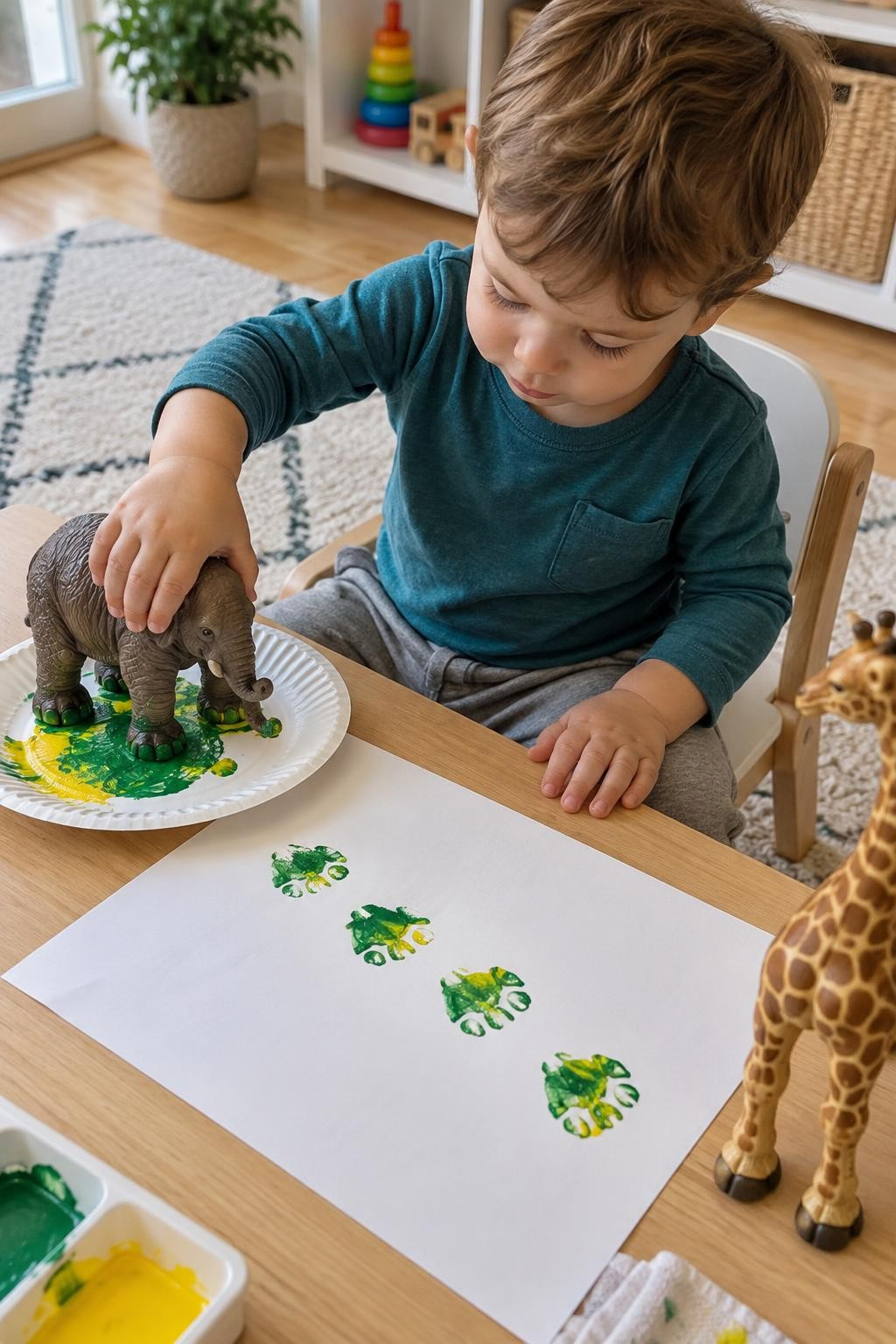
Choose one or two large plastic toy animals with broad feet. Dip the feet lightly into washable paint, then help your child walk or bounce the toy across a paper plate. Try turning the animal around, using a second color, or making one line of footprints around the edge. Wash the toy when the stamping is finished. Skip animals with tiny detachable parts and use toys that are large enough for toddler play.
Why it works: They get to use a familiar toy in a new way, and moving it one step at a time naturally creates a trail they can keep extending.
Age range tweak:
- 18-24 months: Use one large animal and help make a short row of prints.
- 24-36 months: Let them choose the direction of the trail and switch between two large animals.
The Bottom Line
Skipping scissors doesn't make these placeholder crafts. A whole paper plate can take finger paint, car tracks, water-blended marker scribbles, torn tissue, or toy-animal footprints without any cutting at all.
That also means less prep for you. Put the plate down, add one material, and your toddler can actually do the main part of the activity.

Want to have these ideas in one place, customized for your kid in just a click? Grab our free Screen-Free Activity Finder.
The Screen-Free Activity Finder is free. Put your email in below and we'll send it over.